 Image 1 of 5
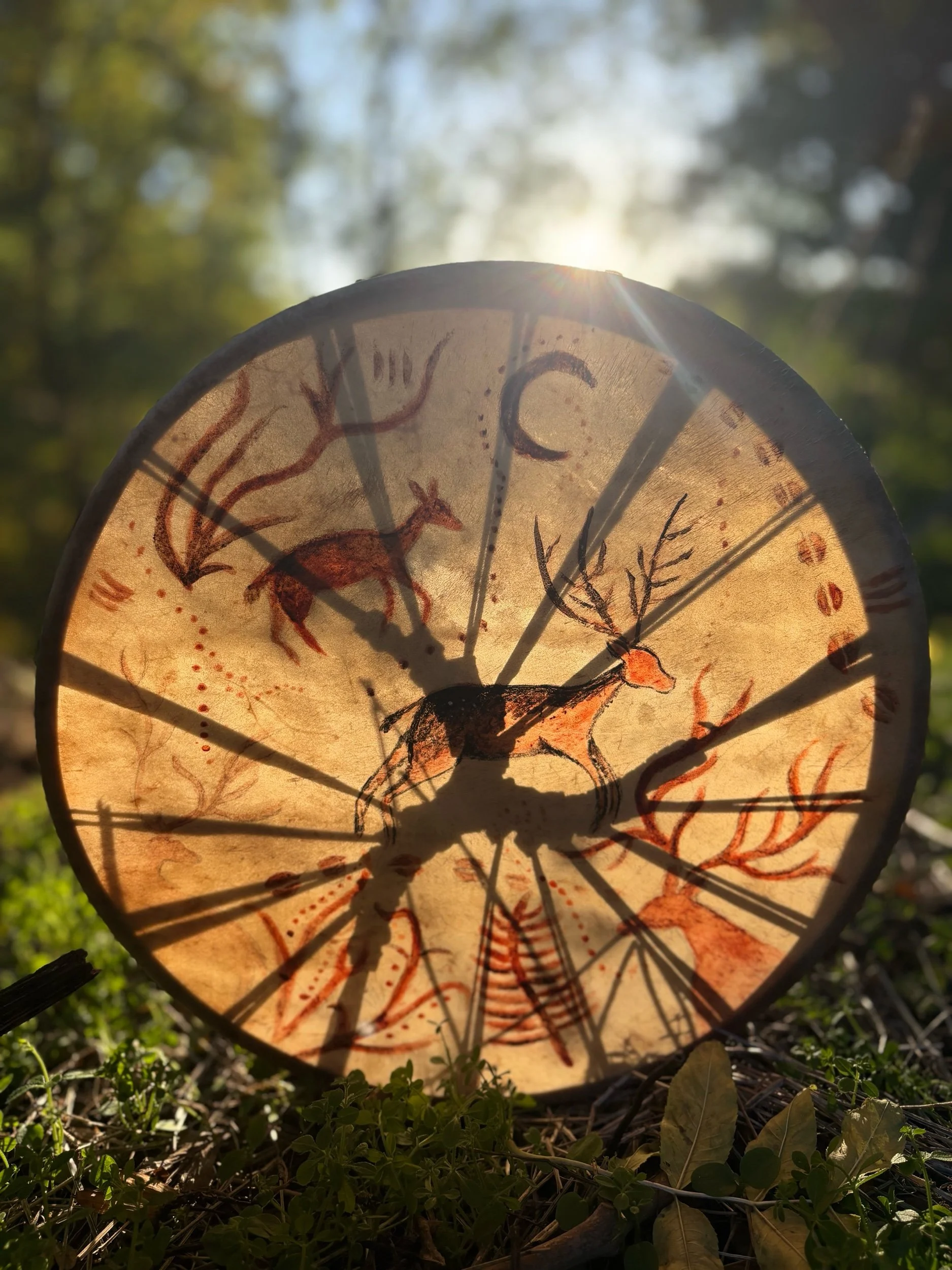 Image 2 of 5
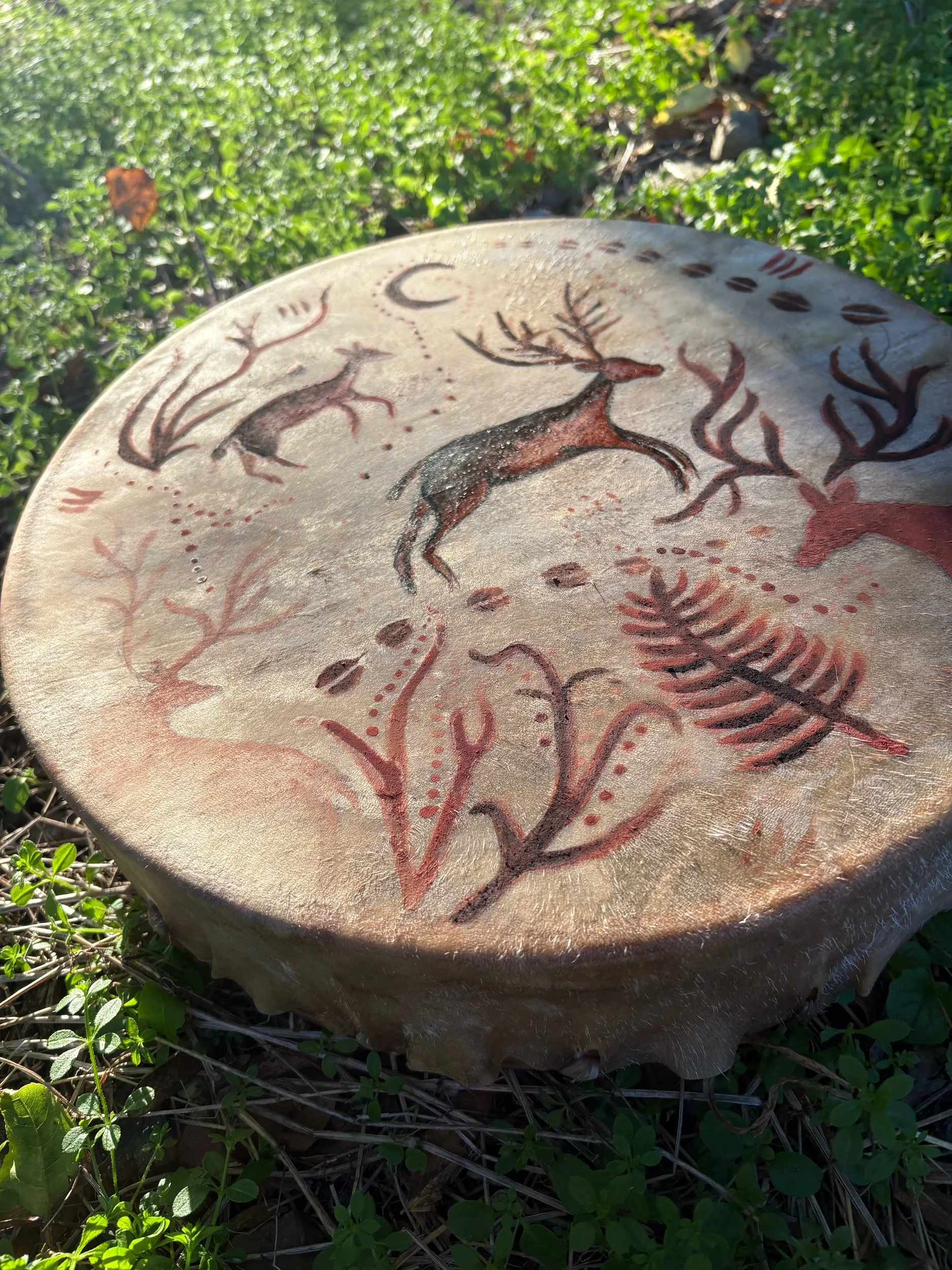 Image 3 of 5
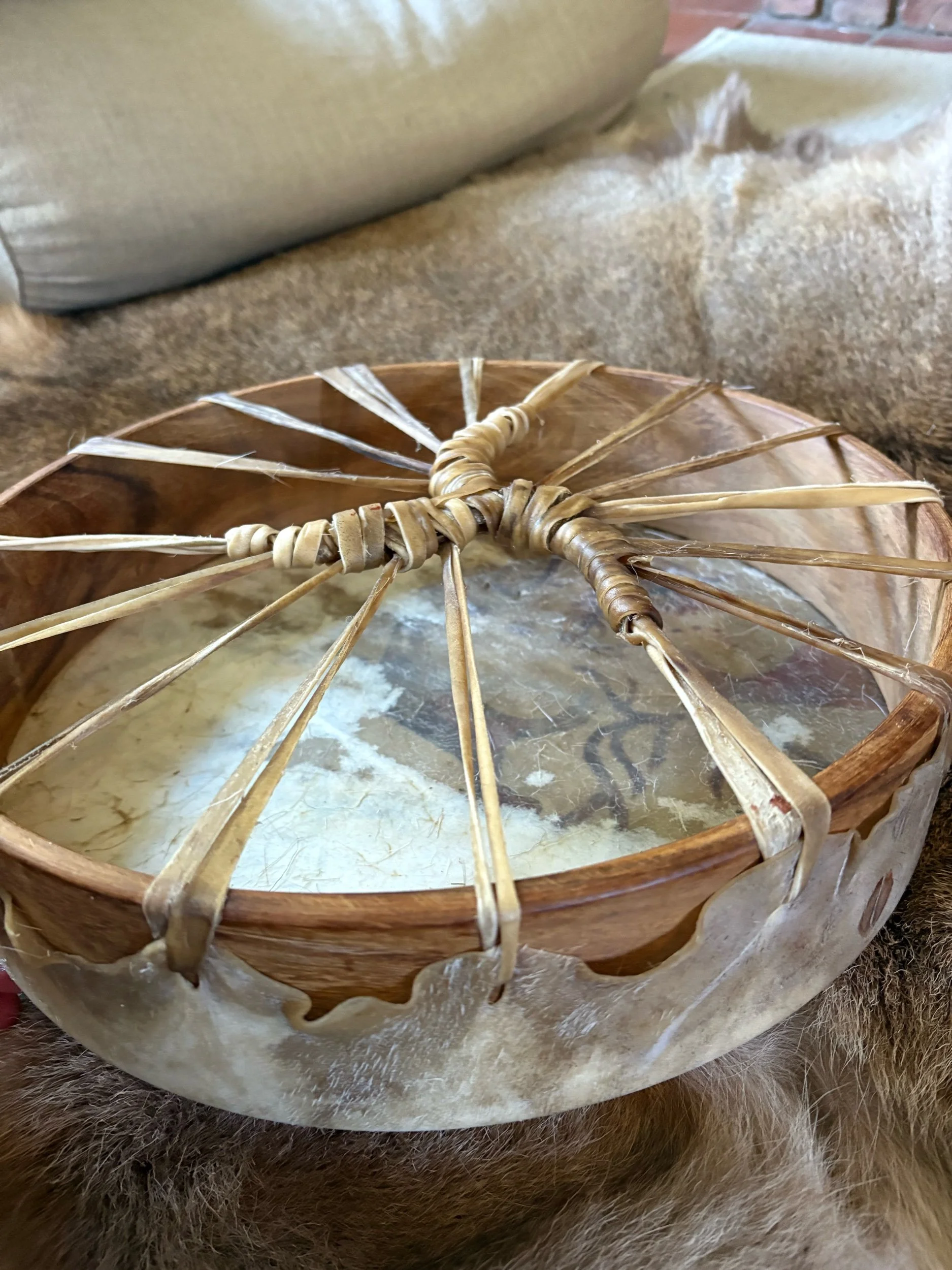 Image 4 of 5
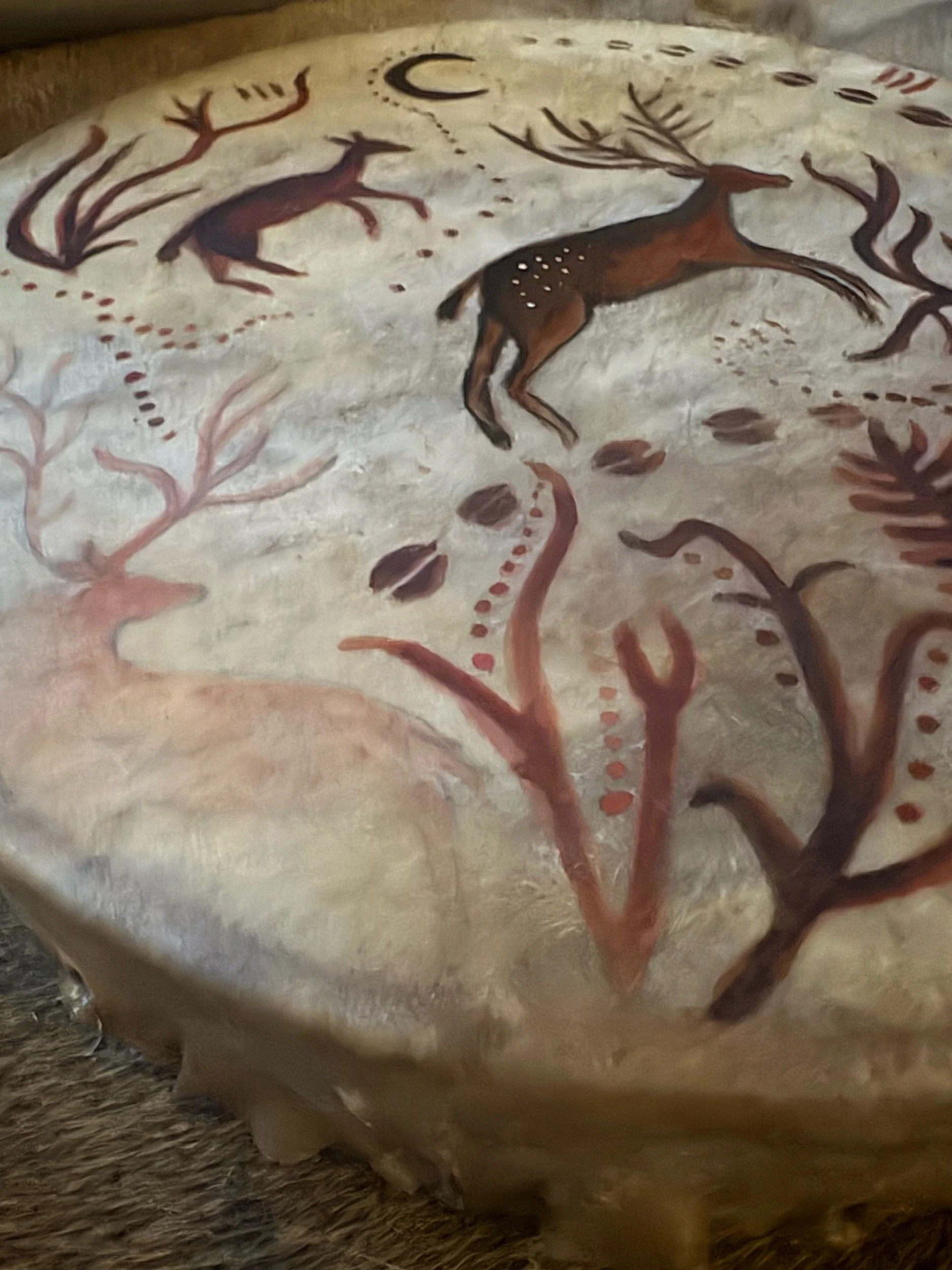 Image 5 of 5
There is a language older than words.
I feel it often in my work, stirring beneath the names we have given things. Beneath deer, bone, root, skin. A language that once belonged as much to our hands as to our mouths.
Before we wrote our stories onto paper, we left marks upon stone. In the darkness of caves, animals emerged beneath the movement of human hands. Deer and horses, great antlered bodies, creatures running, turning, disappearing again into the contours of rock. Ochre was gathered from earth, charcoaled came from fire. Hands were pressed against stone and surrounded with pigment.
We do not truly know what was being spoken there, maybe a story, or a prayer, perhaps remembrance or relationship. Or something for which we no longer have a word.
This drum feels like a ode to that remembering.
It began, as so much of my work does, with the body of a deer. A wild fallow deer who once moved through the Welsh–Herefordshire borderlands.
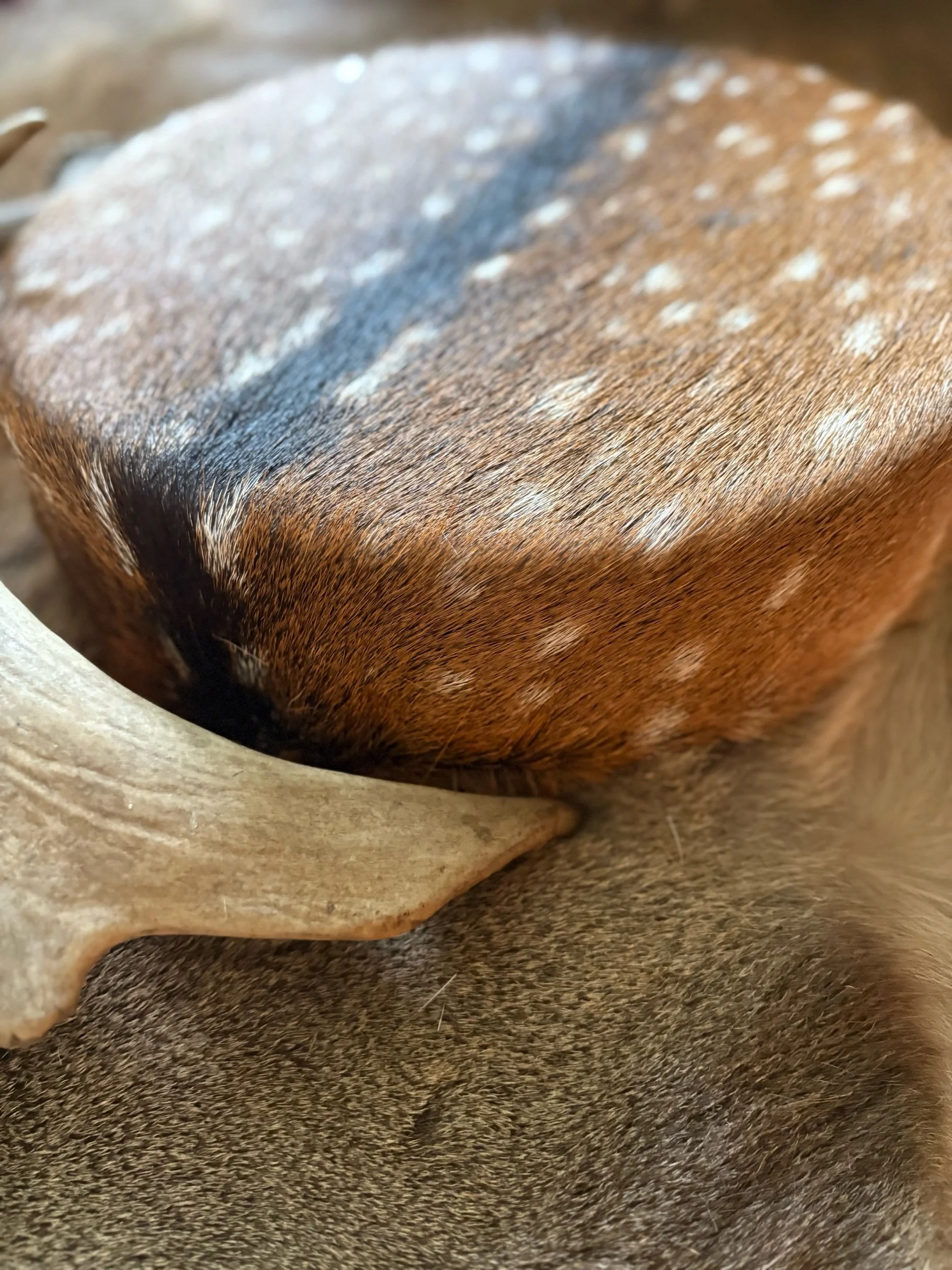
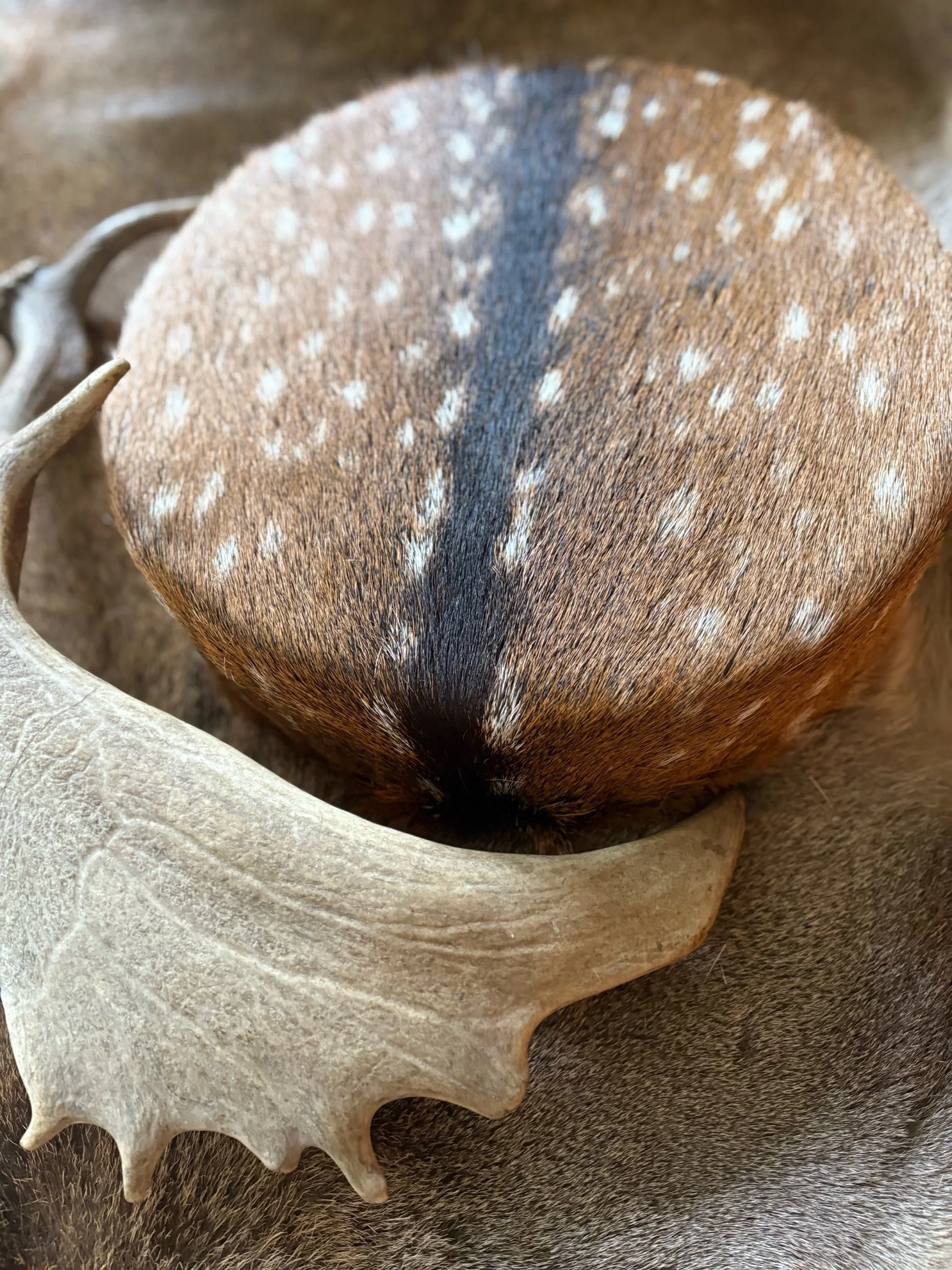
The hide came to me through the deer-management culls of these lands, something that might otherwise have been discarded. I worked with it slowly, transforming skin into rawhide with my own hands.
There is an intimacy that comes from preparing a hide yourself. You begin to know a body through what remains. The places where the skin thickens and thins, the scars, the tiny imperfections or the marks of a life that happened before you ever touched it.
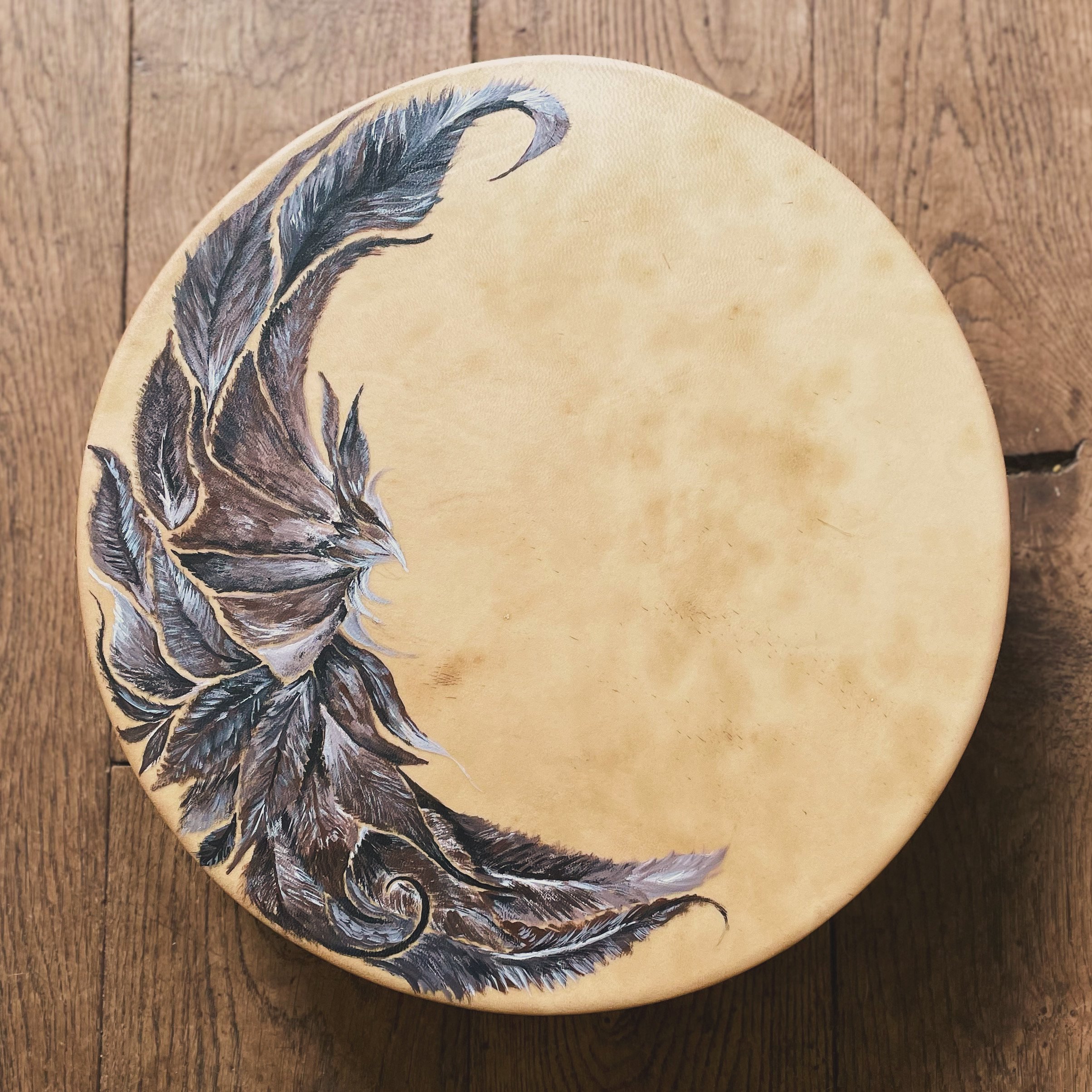
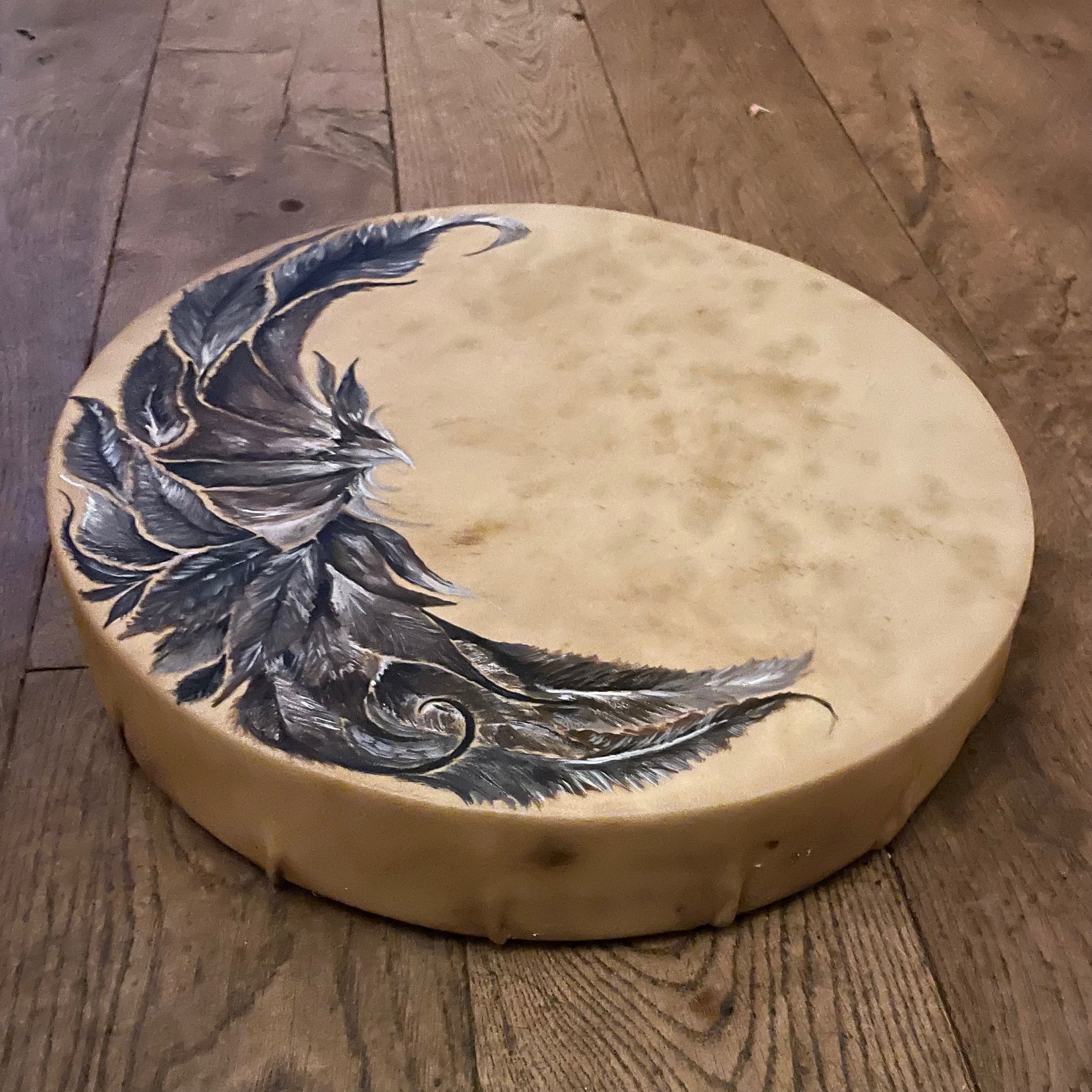
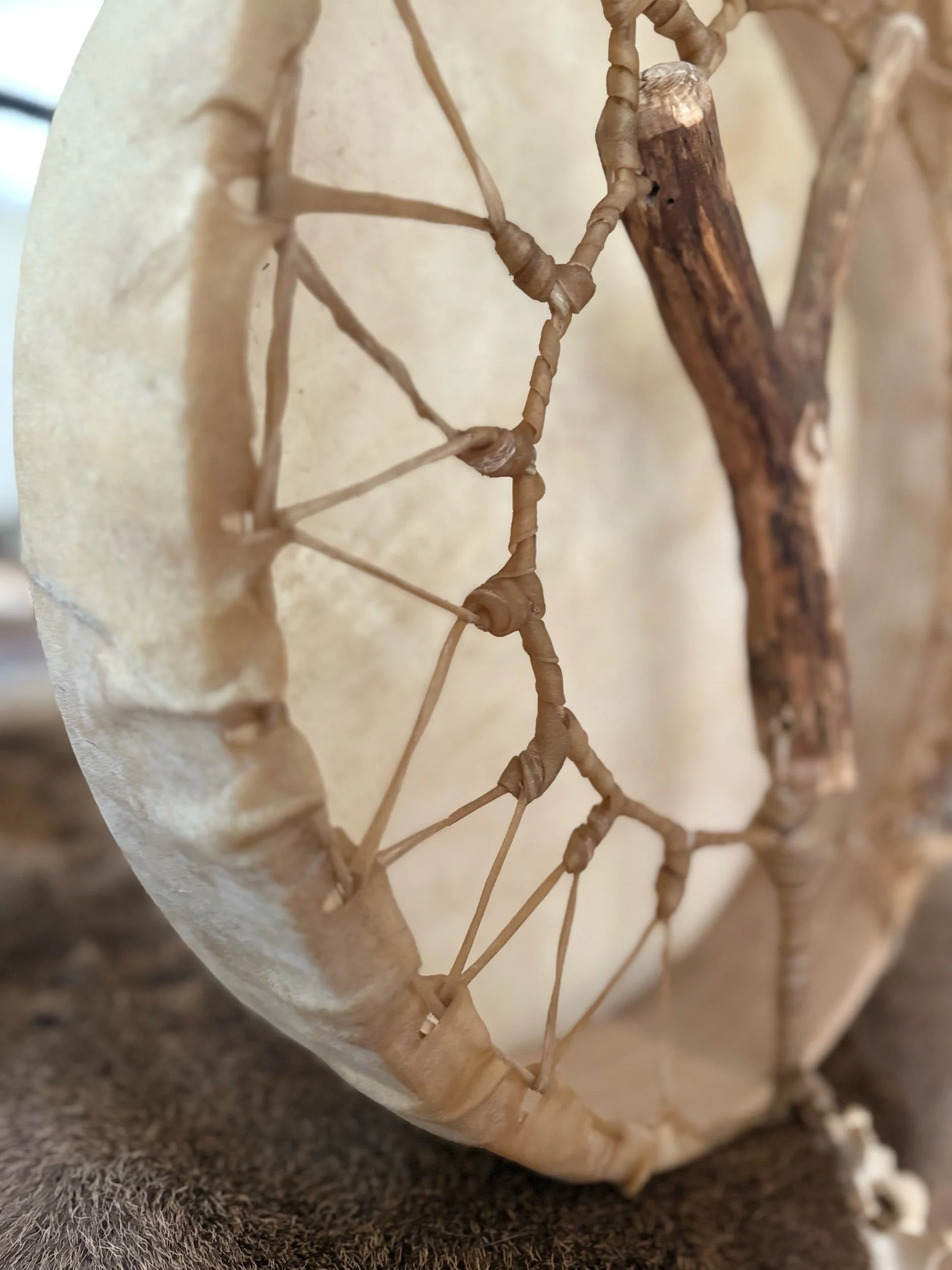
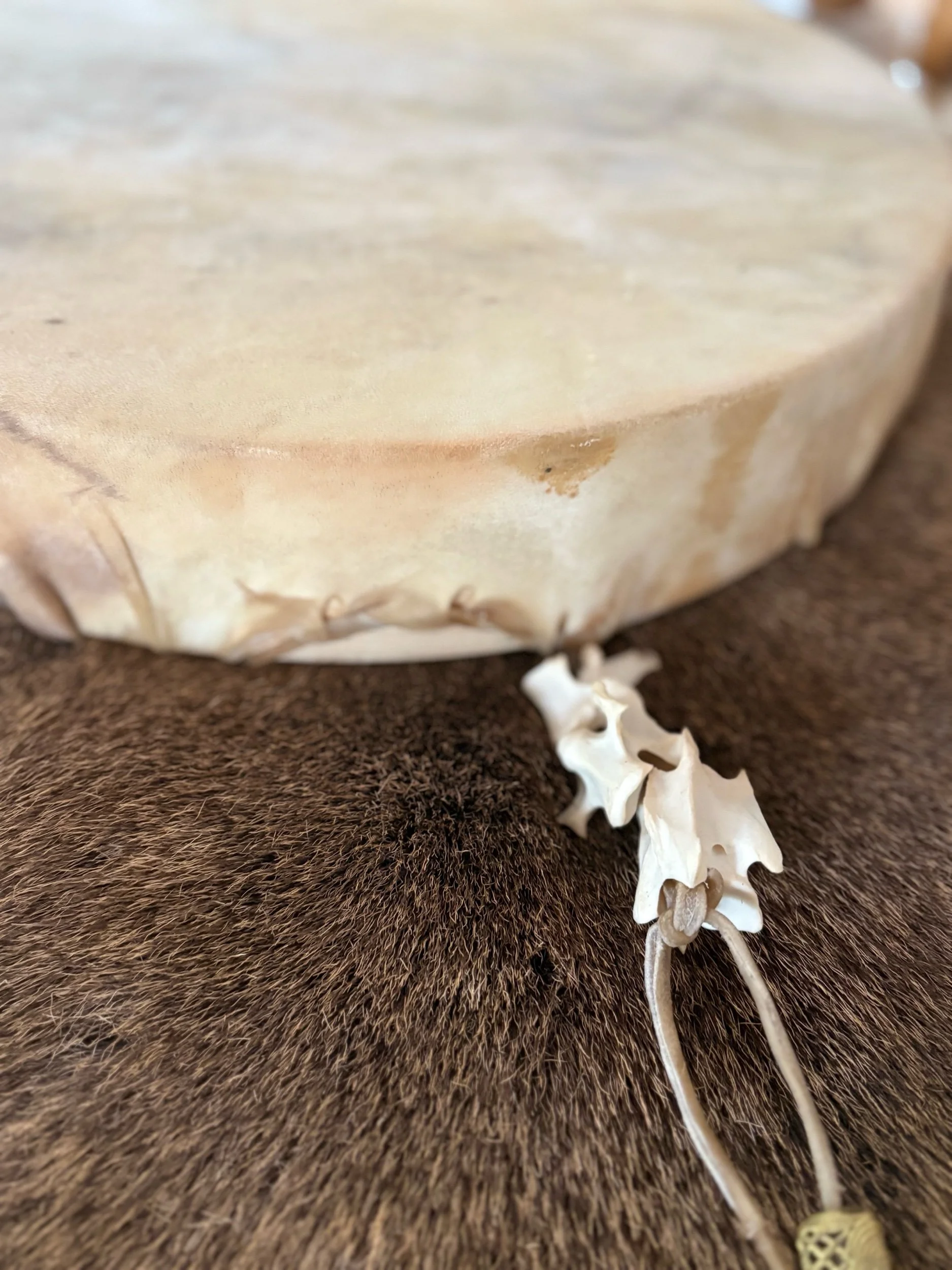
I don't want to erase those things, they are part of the story. Eventually that hide was stretched across a 14-inch rosewood hoop and became drum.
And then I returned to the old language of pigment.
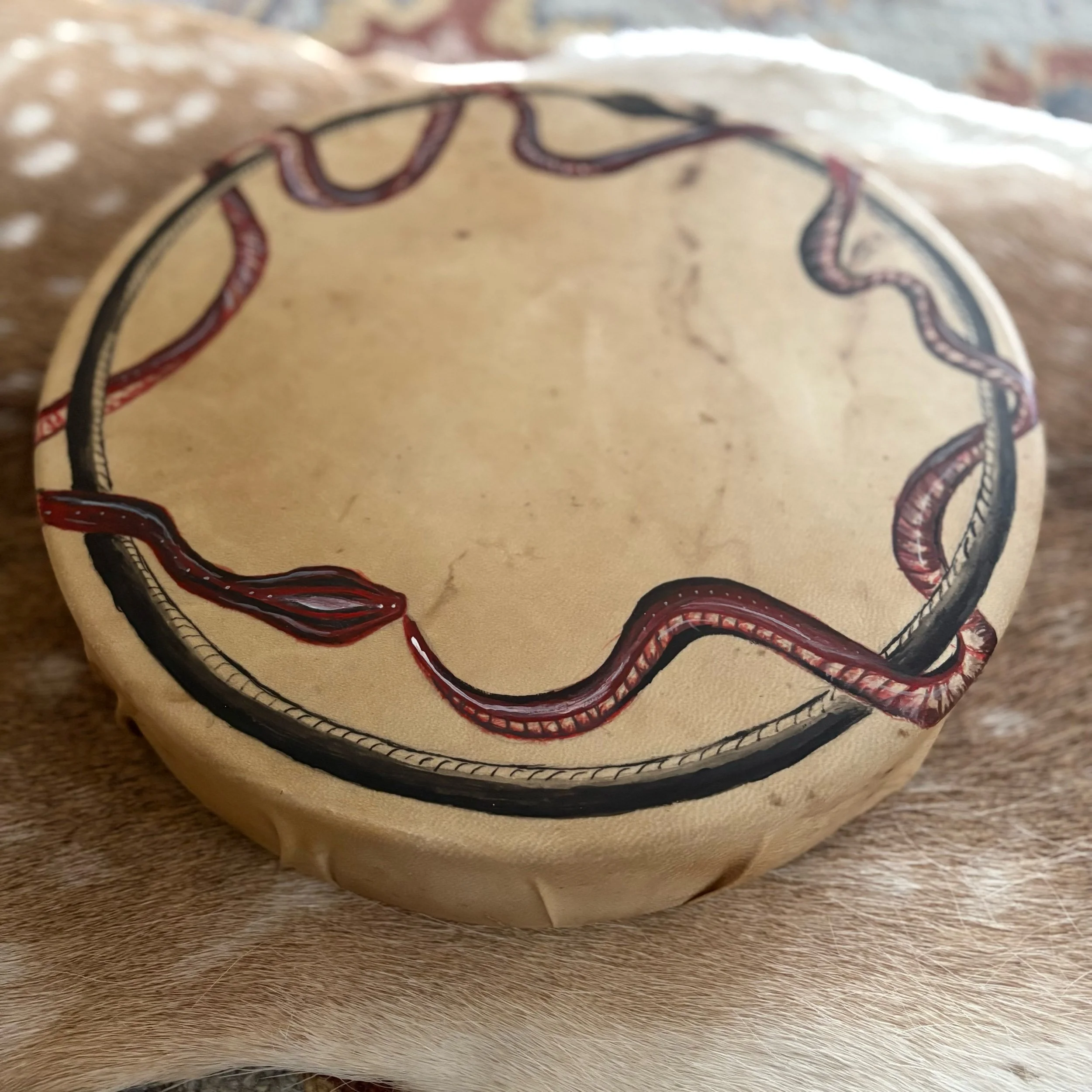
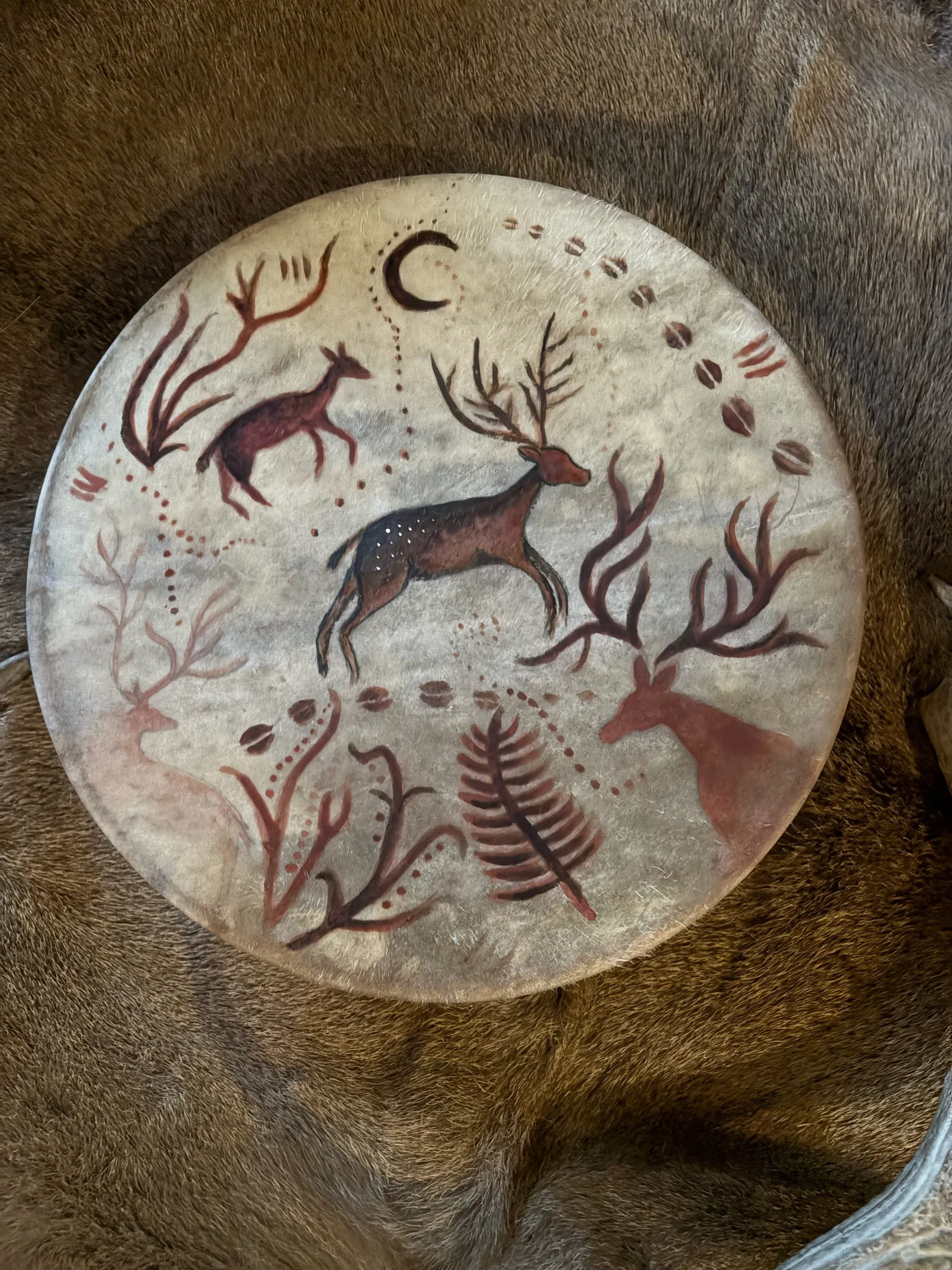
I took madder root , unassuming, earthy root holding astonishing reds beneath the soil and worked it into ink until that Root became red ink
For the black, I returned to the deer. Deer bones were placed into fire and allowed to carbonise in the heat, transformed through one of our oldest alchemies. What emerged was blackened, brittle and changed. I ground it slowly into a fine pigment until Bone became black paint
And with root and bone, I began to return the deer to its own skin.
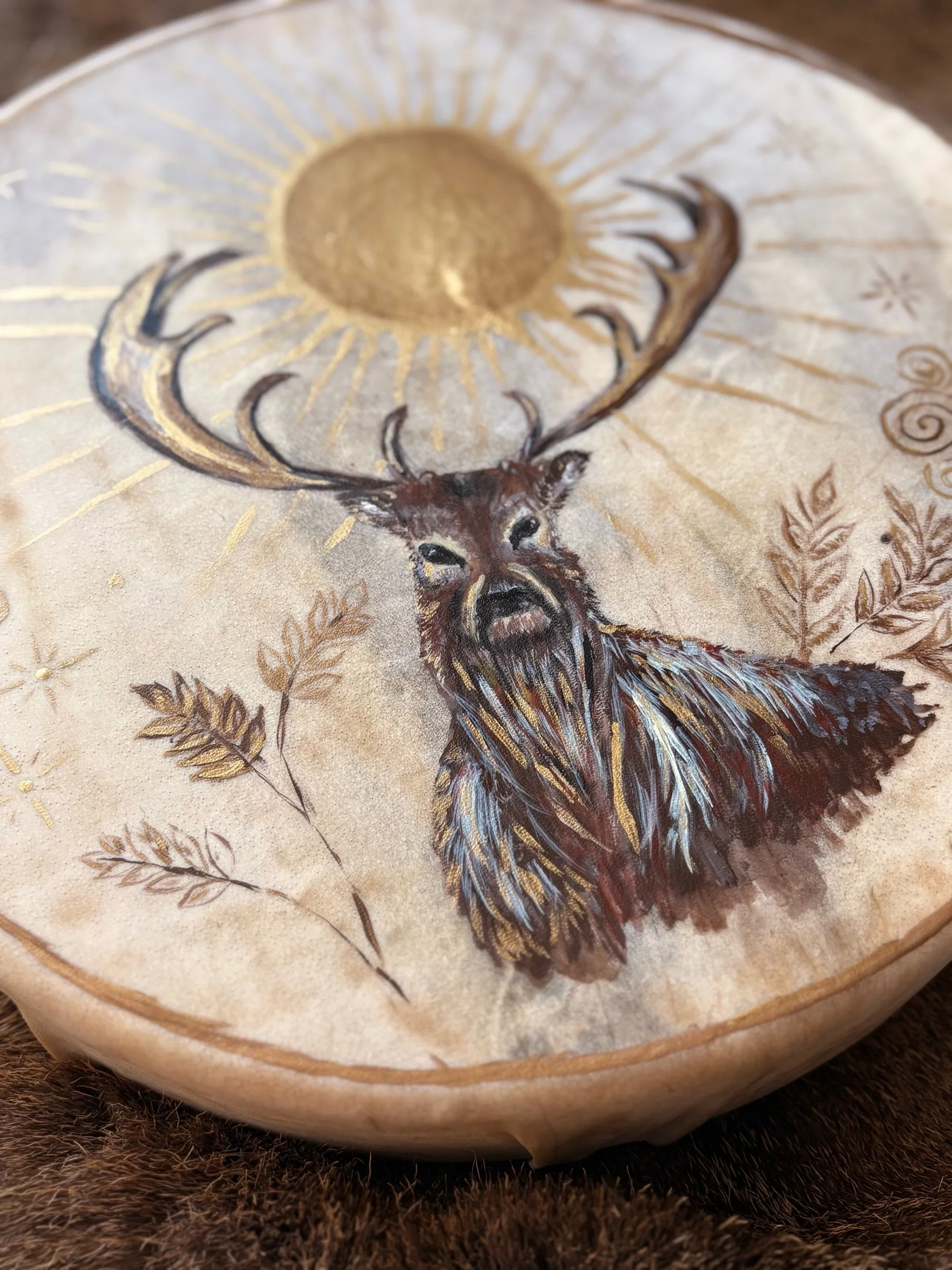
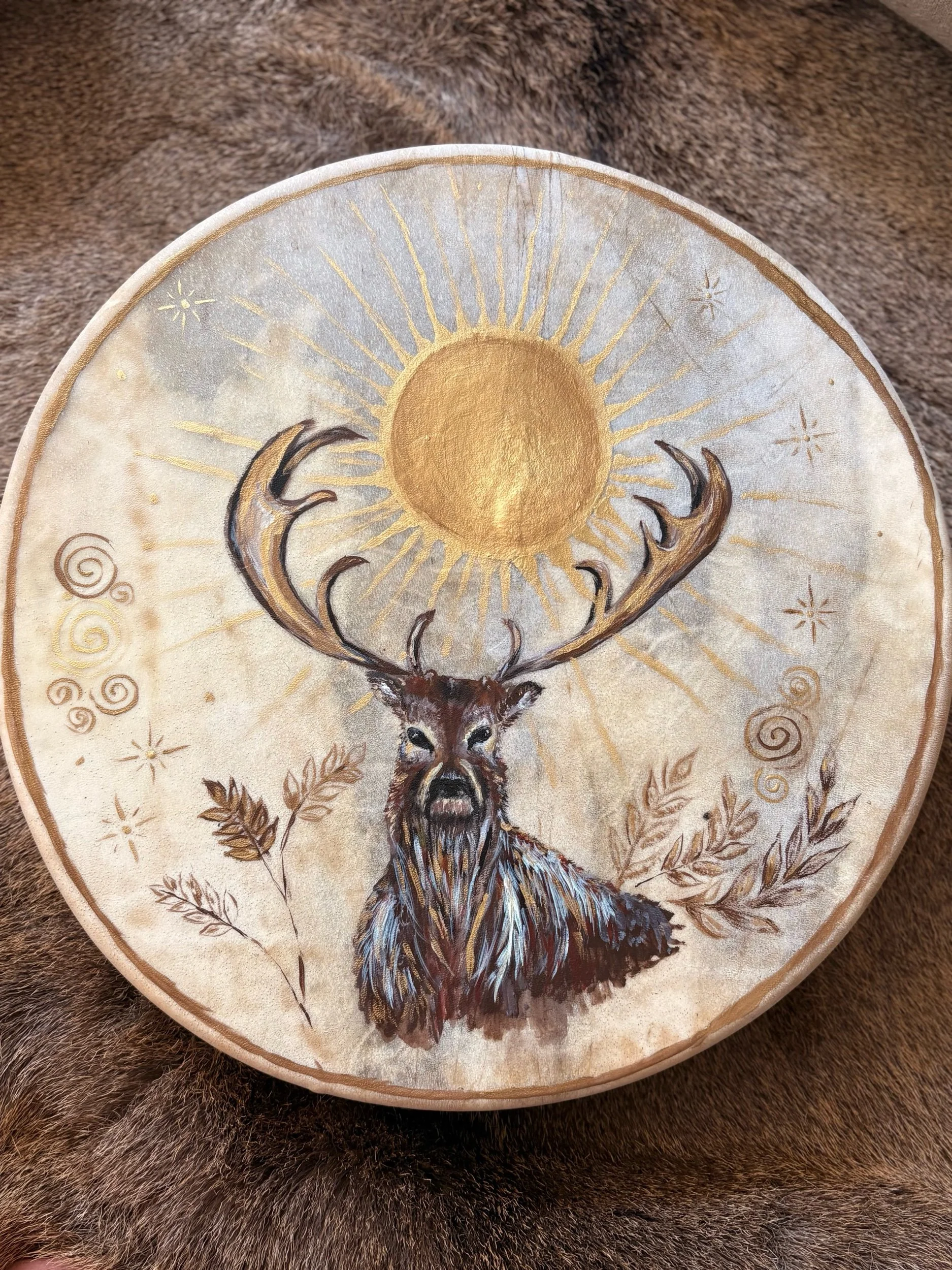
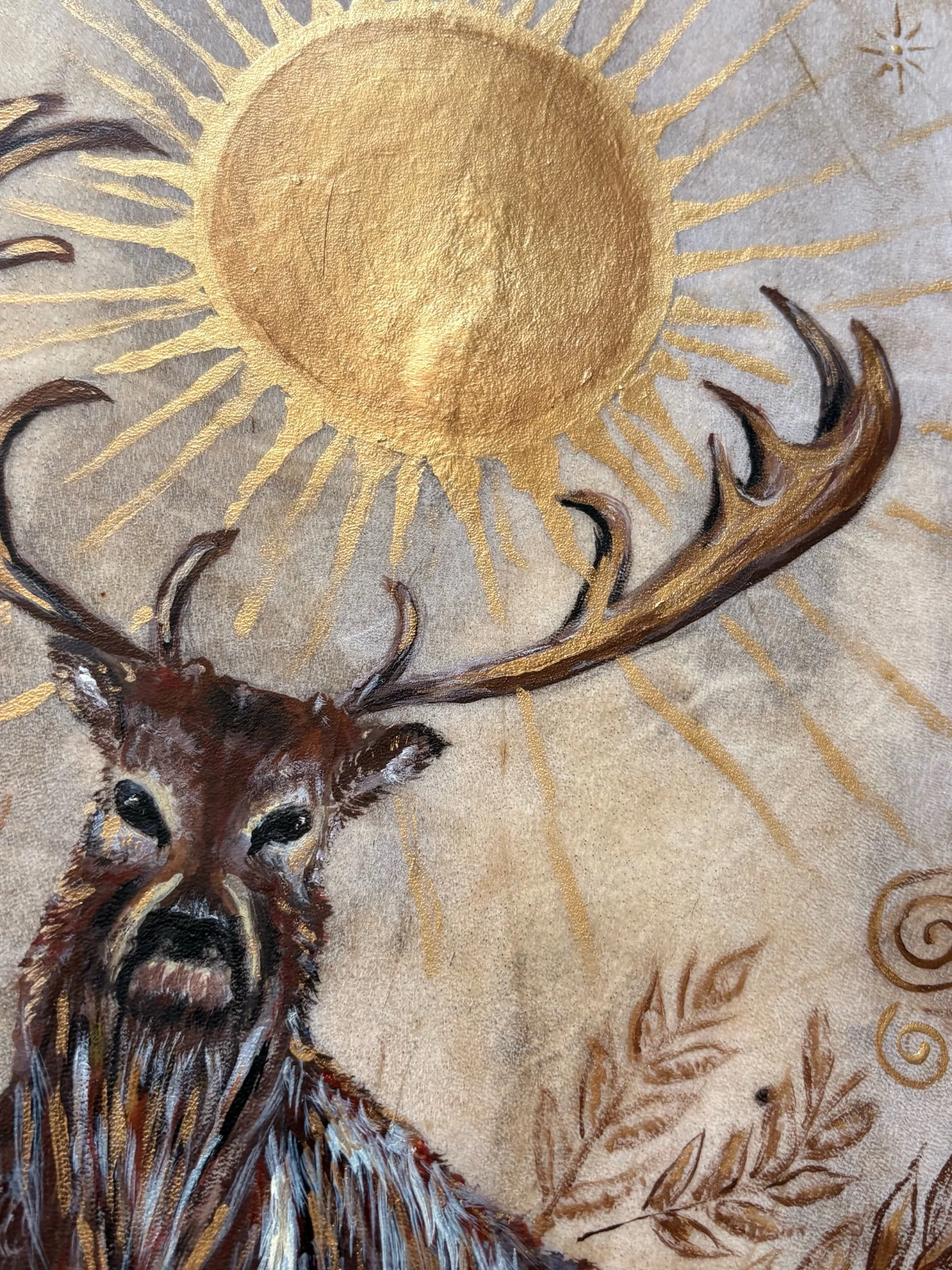
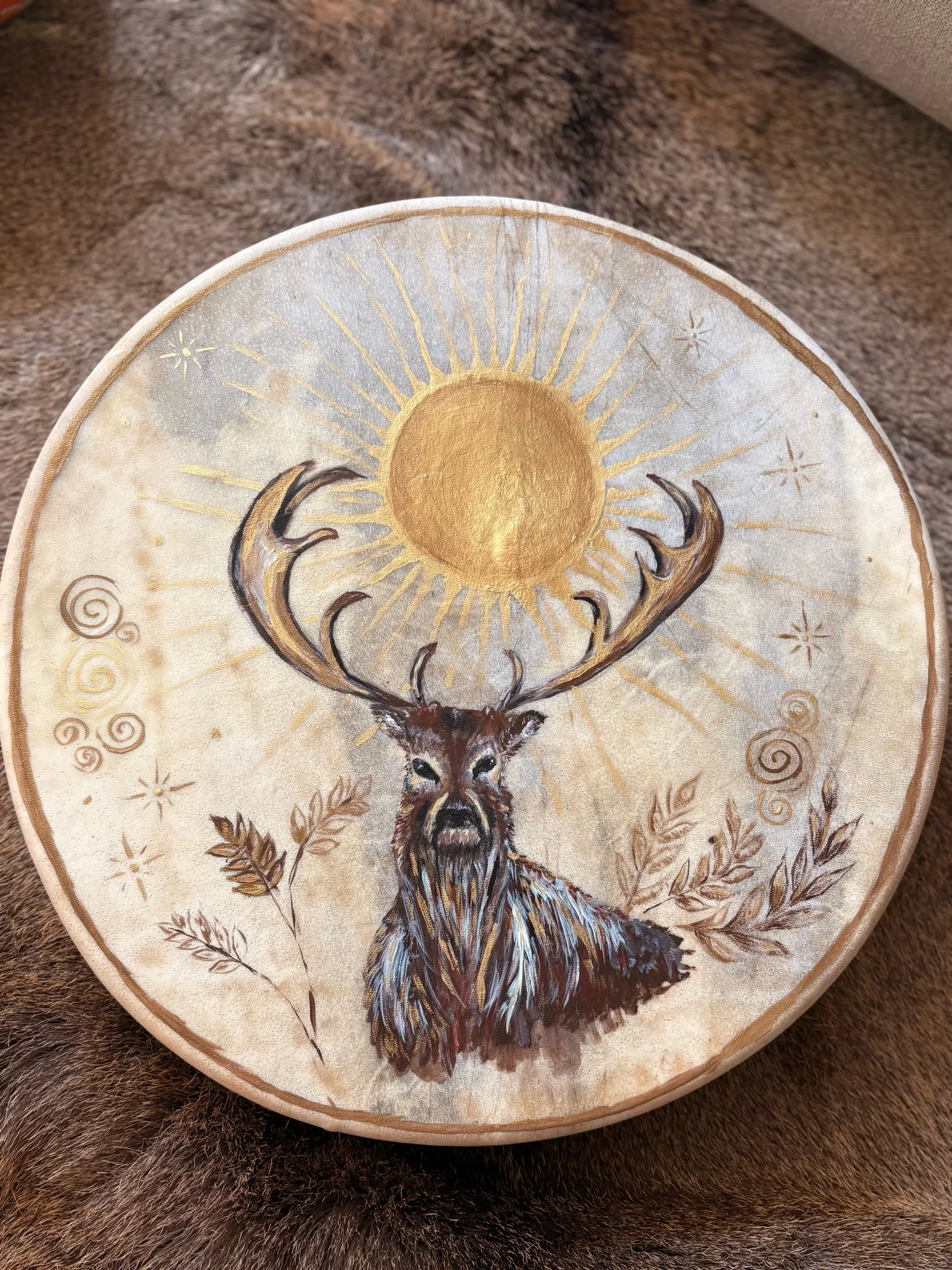
The animals painted upon this drum are my interpretations of the creatures that move across ancient cave walls. They are not replicas of particular paintings. I wanted them to retain something less certain than that , marks emerging from darkness, bodies half remembered, as though they have always been somewhere inside the hide waiting to be noticed.
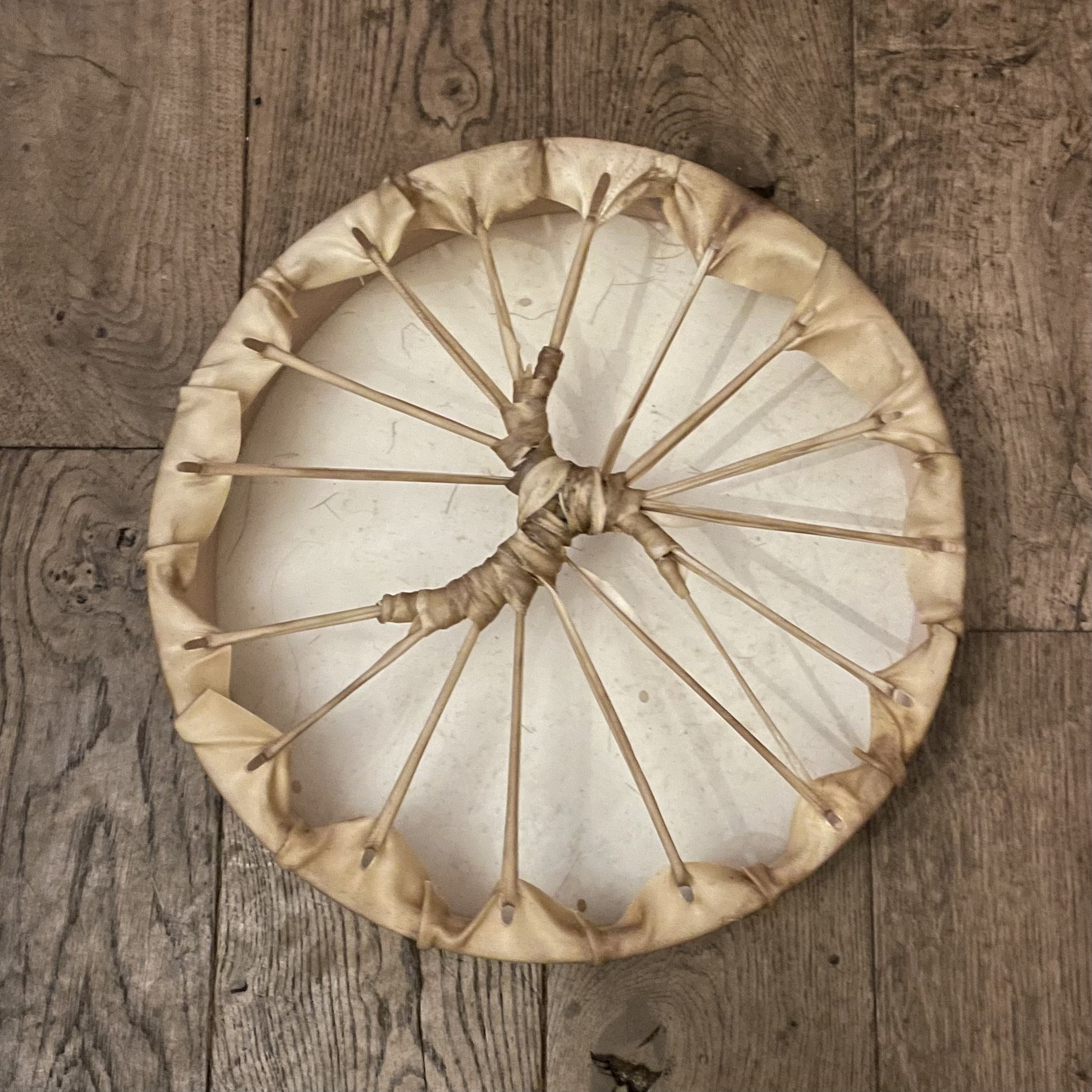
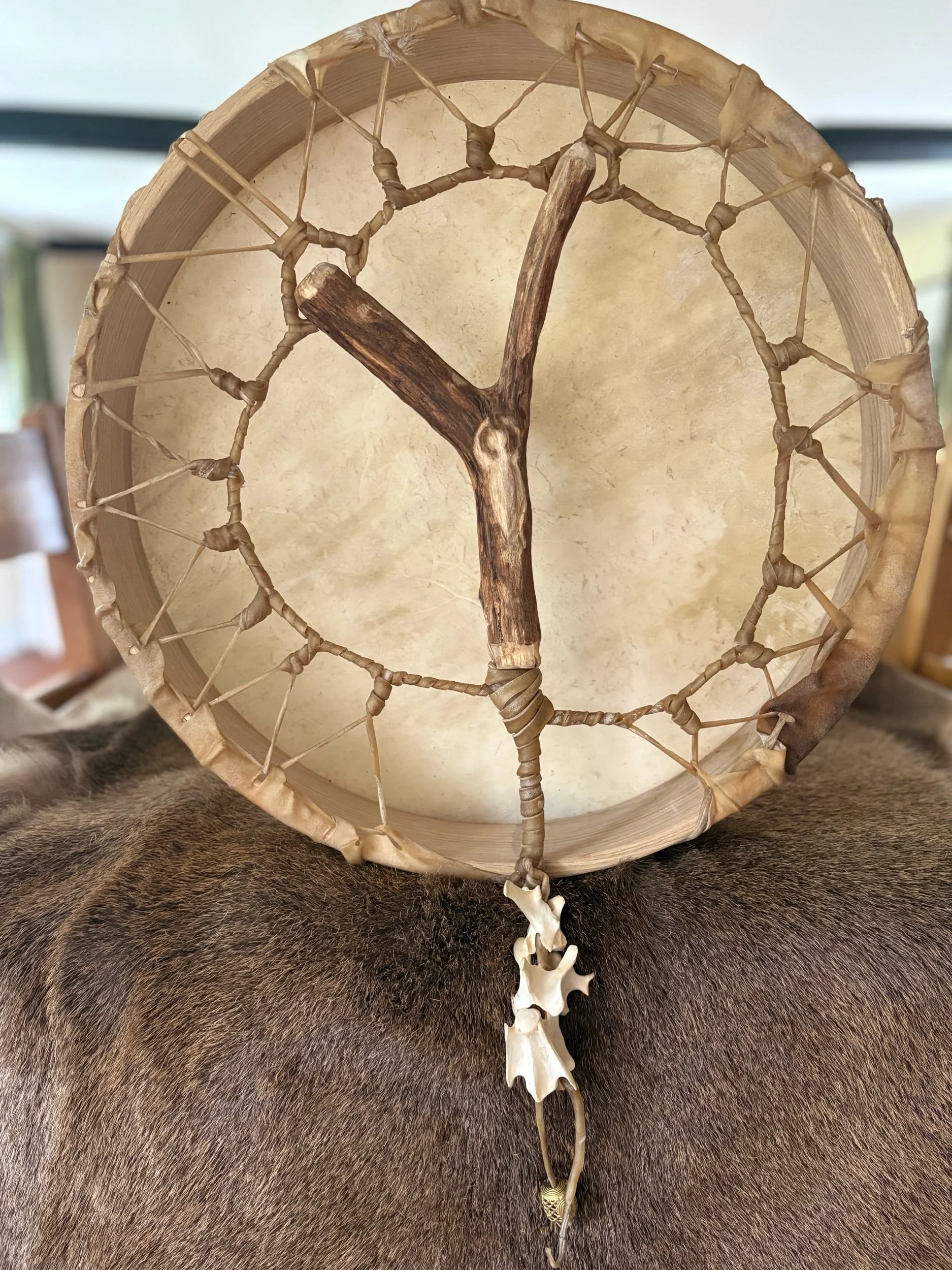
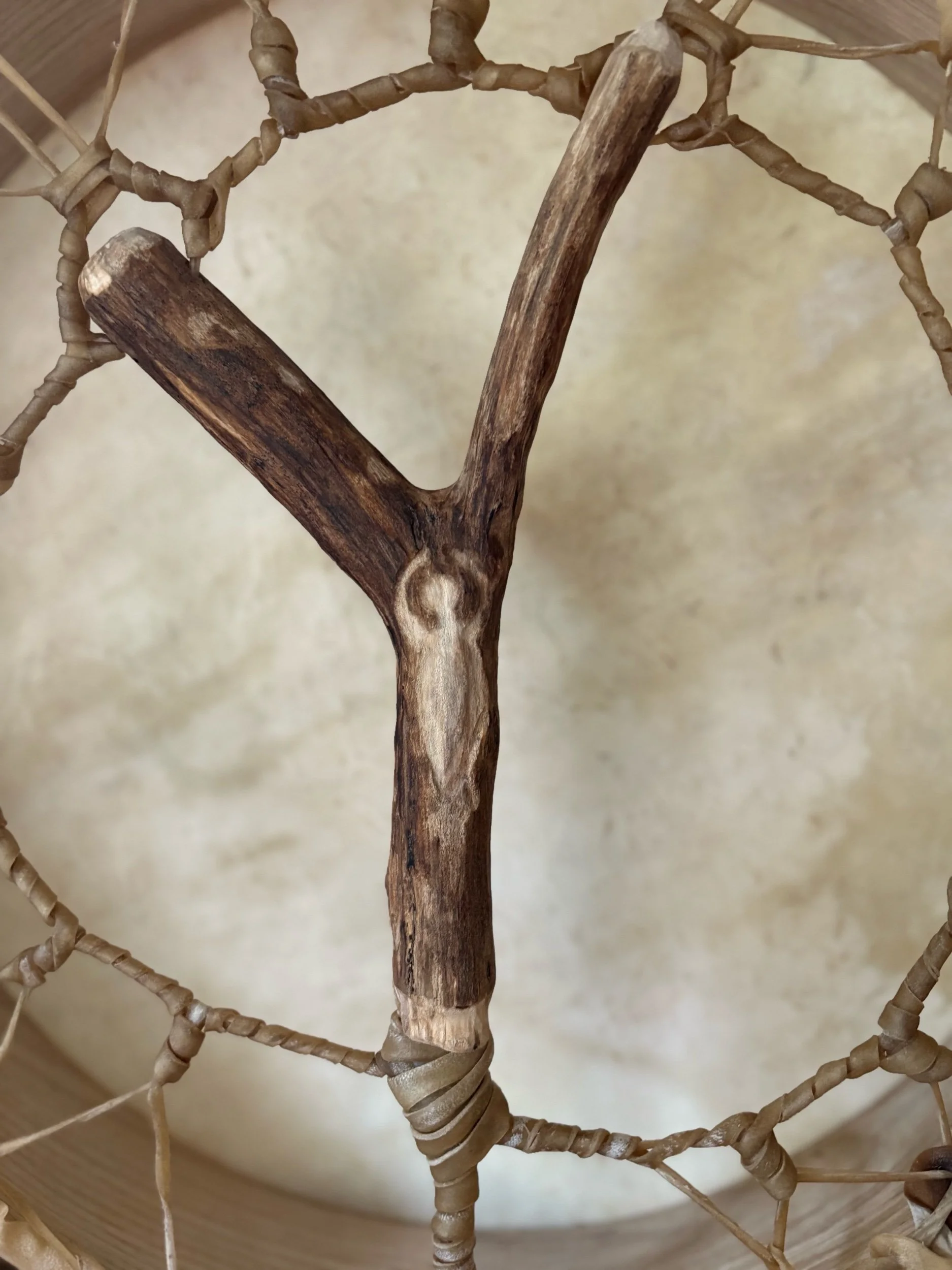
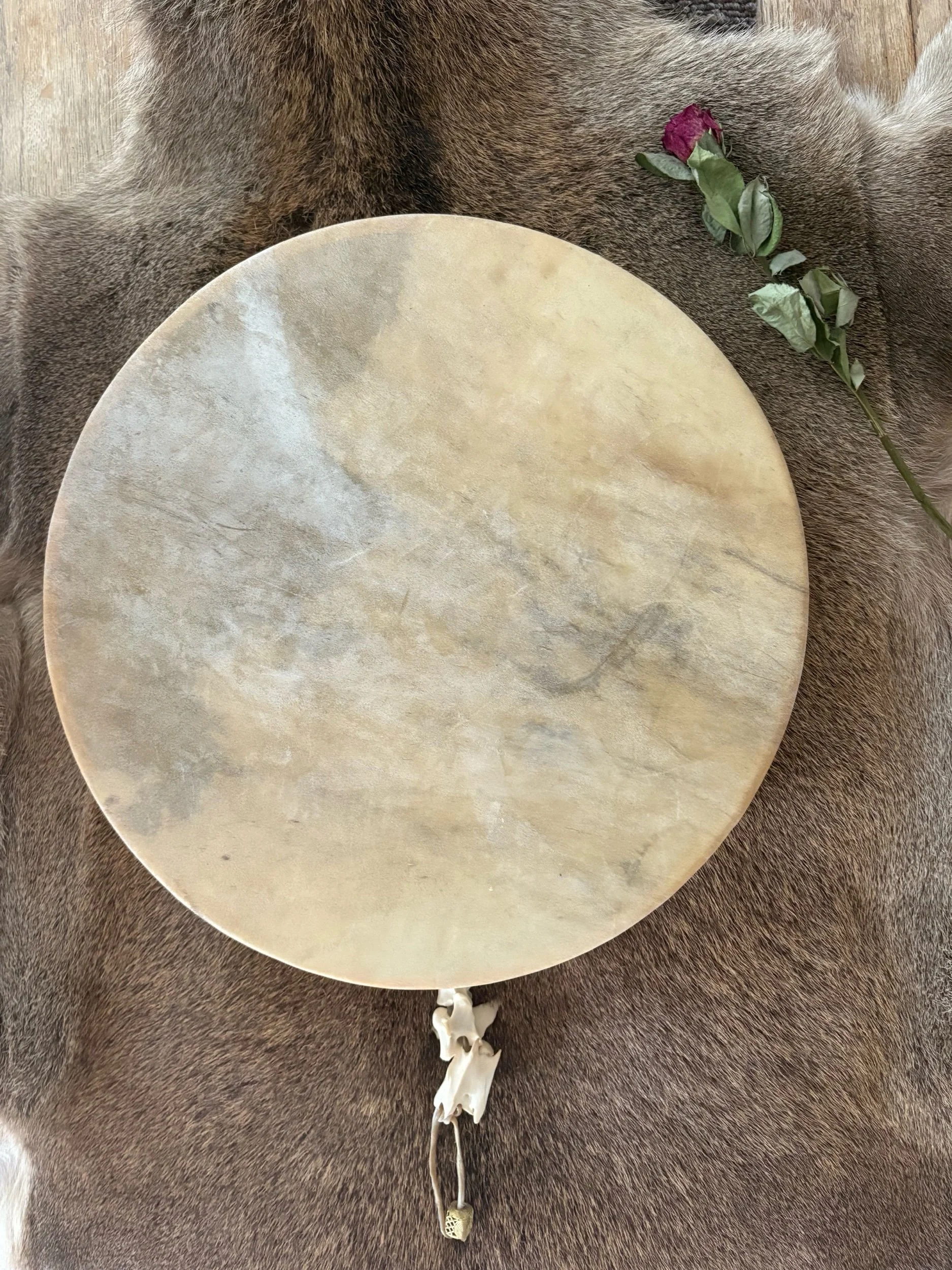
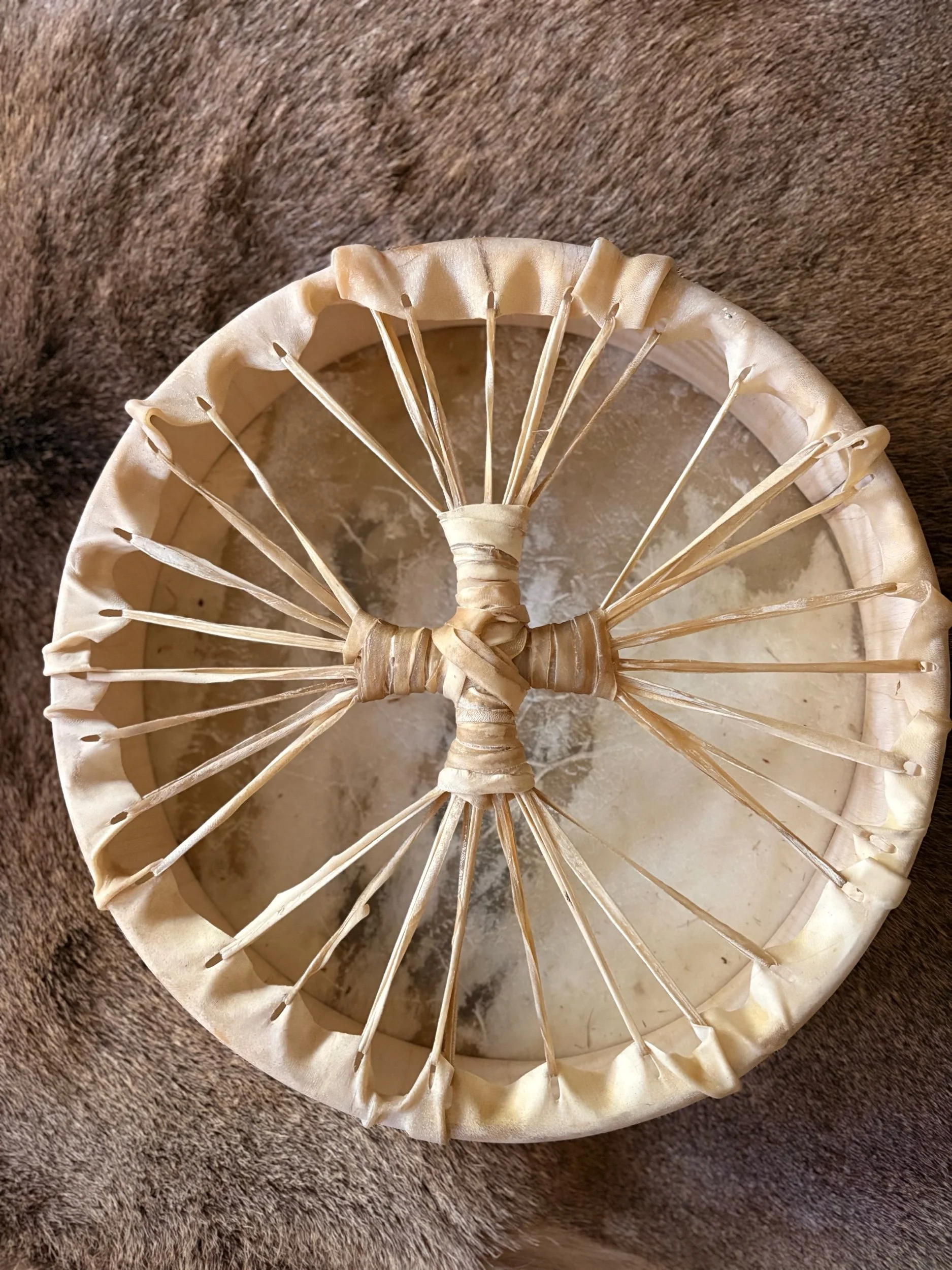
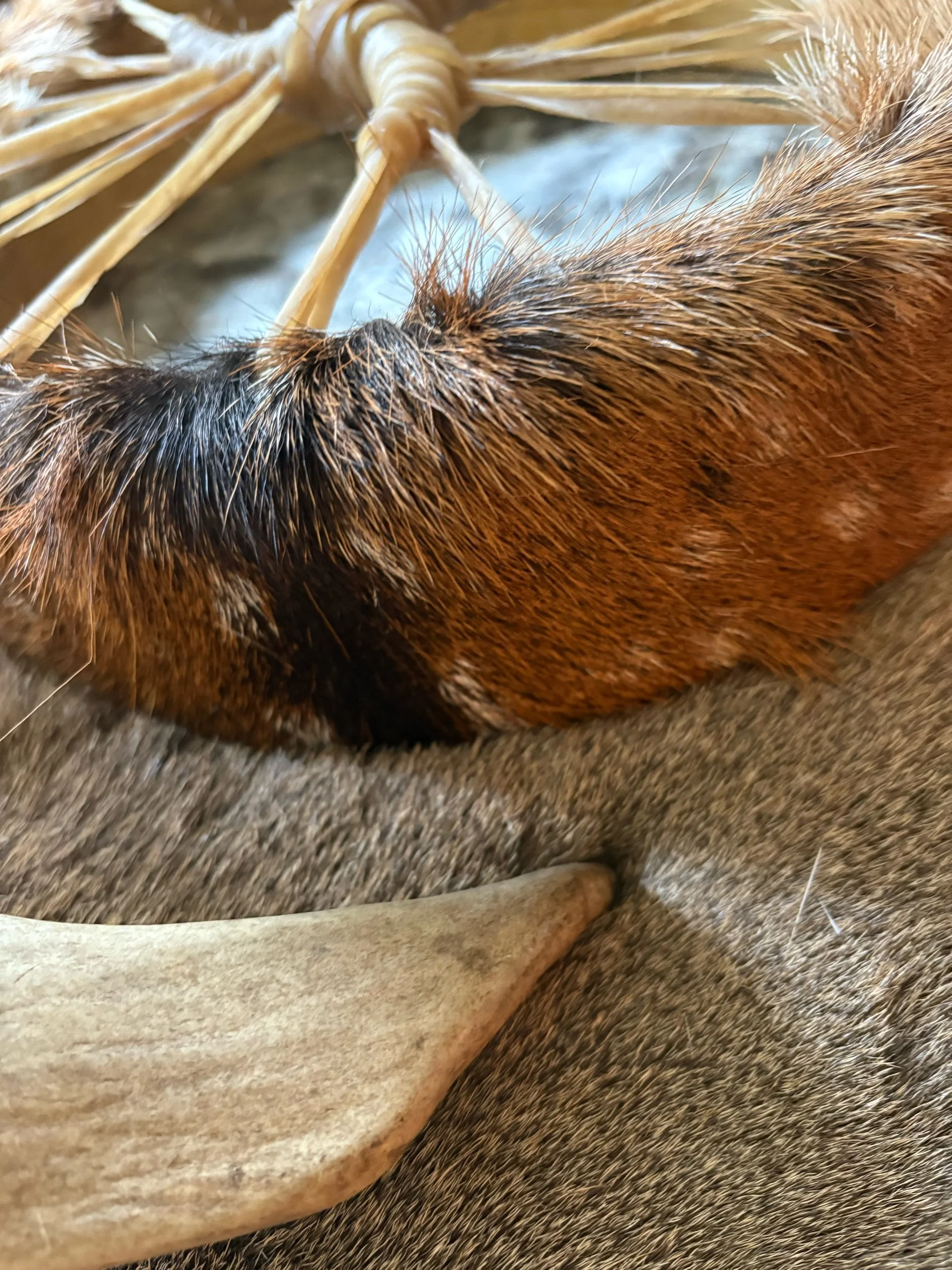
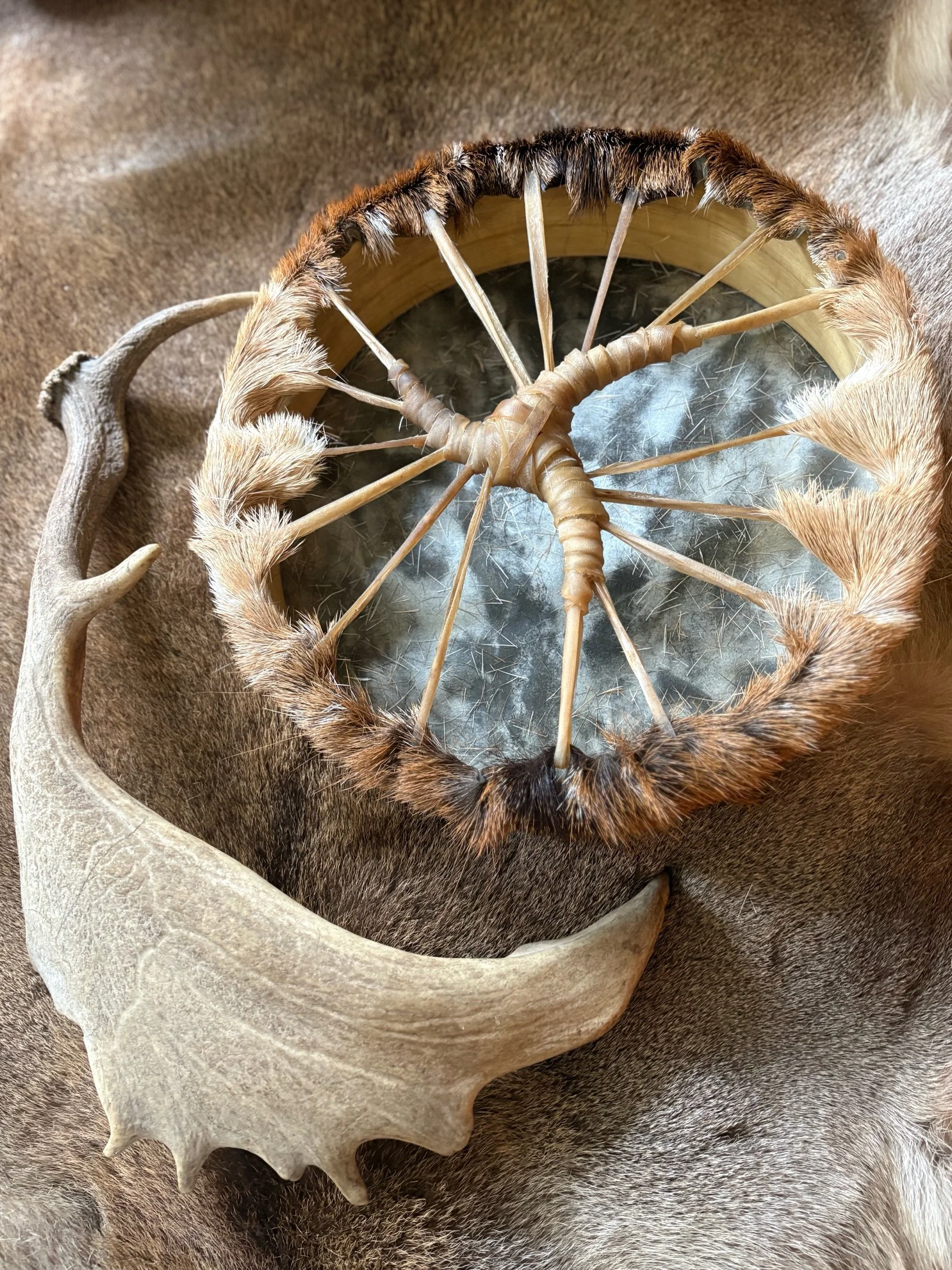
Around the back, the story continues. A Triskele sits at the centre of the drum,
Different bodies meeting one another again and that to me is what this drum speaks of, Relationship.
Not an attempt to return to some imagined time when humans lived perfectly alongside the wild. Our relationship with animals has always contained complexity , hunger and reverence, death and nourishment, beauty and necessity. But there was a time when darkness was truly dark.
When fire gathered people together. When the night sky was not something we occasionally looked up at, but a map, when seasons mattered because our bodies depended upon them.
When an animal was not an abstract thing encountered through a screen or a supermarket shelf, but another living body whose movements, migrations, tracks and death were woven intimately into human survival.
I wonder sometimes what our ancestors understood through that closeness that we have forgotten.
What did it mean to sit beside a fire with blood beneath your fingernails and stars above your head?
To know the animal whose skin warmed you or the tree whose wood burned beside you.
To dig a root from darkness and discover that hidden inside it was red.
To place bone into fire and discover black.
And then to take those colours into the darkness and make an animal appear upon stone.
There is something almost unbearably beautiful to me in that. Not because I believe we need to become our ancestors again, but because somewhere beneath everything we have built since, we are still animals ourselves.
We still recognise fire , our bodies still respond to darkness, we still understand the smell of earth after rain.
We still look at the branching antlers of a deer and feel something that existed long before we found words for it. Perhaps the old language never disappeared, maybe its just we simply became very noisy.
This one feels like a small act of listening again.
£365 plus P&P or free kerbside collection from Ludlow.
There is a language older than words.
I feel it often in my work, stirring beneath the names we have given things. Beneath deer, bone, root, skin. A language that once belonged as much to our hands as to our mouths.
Before we wrote our stories onto paper, we left marks upon stone. In the darkness of caves, animals emerged beneath the movement of human hands. Deer and horses, great antlered bodies, creatures running, turning, disappearing again into the contours of rock. Ochre was gathered from earth, charcoaled came from fire. Hands were pressed against stone and surrounded with pigment.
We do not truly know what was being spoken there, maybe a story, or a prayer, perhaps remembrance or relationship. Or something for which we no longer have a word.
This drum feels like a ode to that remembering.
It began, as so much of my work does, with the body of a deer. A wild fallow deer who once moved through the Welsh–Herefordshire borderlands.
The hide came to me through the deer-management culls of these lands, something that might otherwise have been discarded. I worked with it slowly, transforming skin into rawhide with my own hands.
There is an intimacy that comes from preparing a hide yourself. You begin to know a body through what remains. The places where the skin thickens and thins, the scars, the tiny imperfections or the marks of a life that happened before you ever touched it.
I don't want to erase those things, they are part of the story. Eventually that hide was stretched across a 14-inch rosewood hoop and became drum.
And then I returned to the old language of pigment.
I took madder root , unassuming, earthy root holding astonishing reds beneath the soil and worked it into ink until that Root became red ink
For the black, I returned to the deer. Deer bones were placed into fire and allowed to carbonise in the heat, transformed through one of our oldest alchemies. What emerged was blackened, brittle and changed. I ground it slowly into a fine pigment until Bone became black paint
And with root and bone, I began to return the deer to its own skin.
The animals painted upon this drum are my interpretations of the creatures that move across ancient cave walls. They are not replicas of particular paintings. I wanted them to retain something less certain than that , marks emerging from darkness, bodies half remembered, as though they have always been somewhere inside the hide waiting to be noticed.
Around the back, the story continues. A Triskele sits at the centre of the drum,
Different bodies meeting one another again and that to me is what this drum speaks of, Relationship.
Not an attempt to return to some imagined time when humans lived perfectly alongside the wild. Our relationship with animals has always contained complexity , hunger and reverence, death and nourishment, beauty and necessity. But there was a time when darkness was truly dark.
When fire gathered people together. When the night sky was not something we occasionally looked up at, but a map, when seasons mattered because our bodies depended upon them.
When an animal was not an abstract thing encountered through a screen or a supermarket shelf, but another living body whose movements, migrations, tracks and death were woven intimately into human survival.
I wonder sometimes what our ancestors understood through that closeness that we have forgotten.
What did it mean to sit beside a fire with blood beneath your fingernails and stars above your head?
To know the animal whose skin warmed you or the tree whose wood burned beside you.
To dig a root from darkness and discover that hidden inside it was red.
To place bone into fire and discover black.
And then to take those colours into the darkness and make an animal appear upon stone.
There is something almost unbearably beautiful to me in that. Not because I believe we need to become our ancestors again, but because somewhere beneath everything we have built since, we are still animals ourselves.
We still recognise fire , our bodies still respond to darkness, we still understand the smell of earth after rain.
We still look at the branching antlers of a deer and feel something that existed long before we found words for it. Perhaps the old language never disappeared, maybe its just we simply became very noisy.
This one feels like a small act of listening again.
£365 plus P&P or free kerbside collection from Ludlow.