 Image 1 of 4
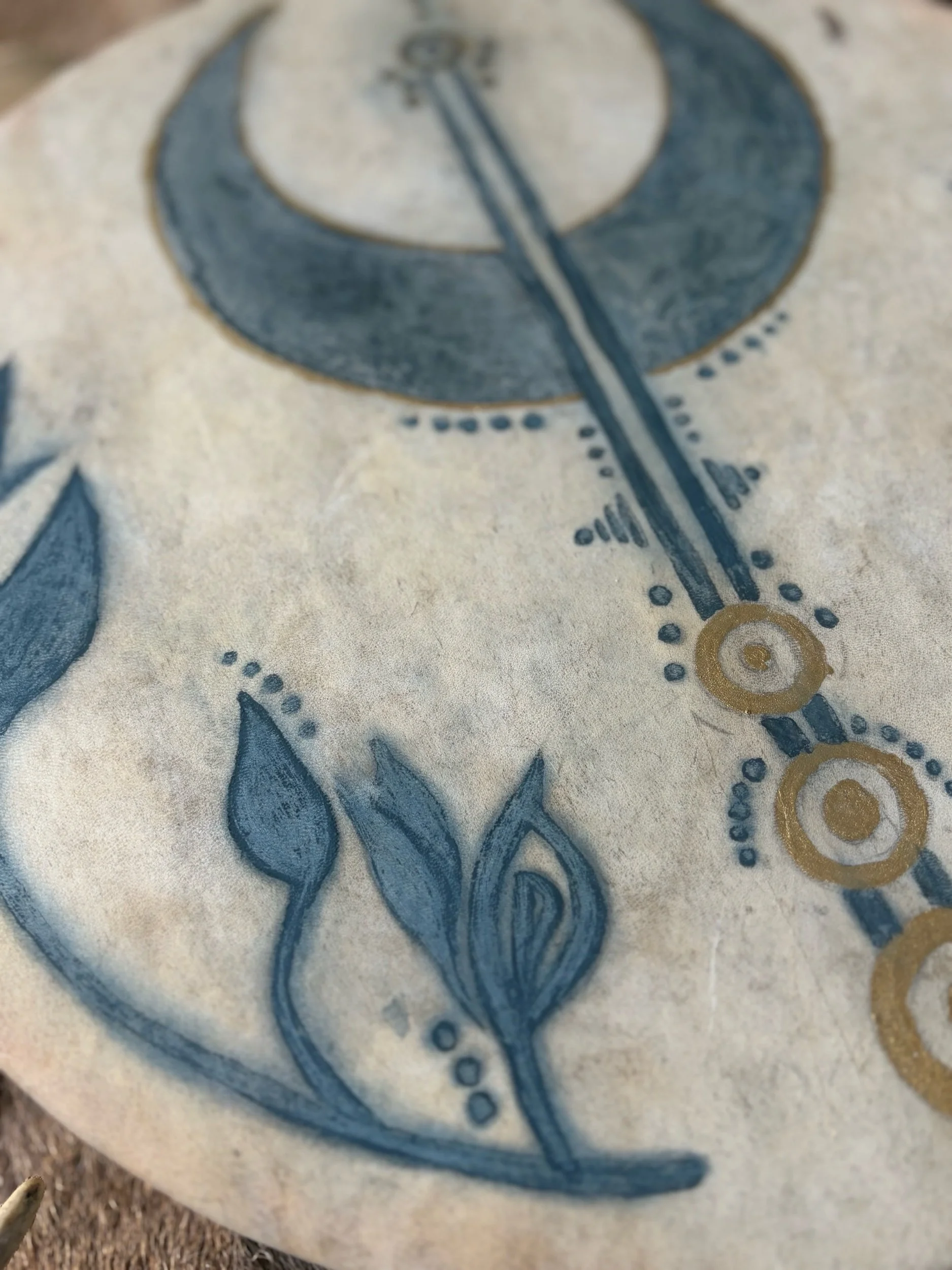 Image 2 of 4
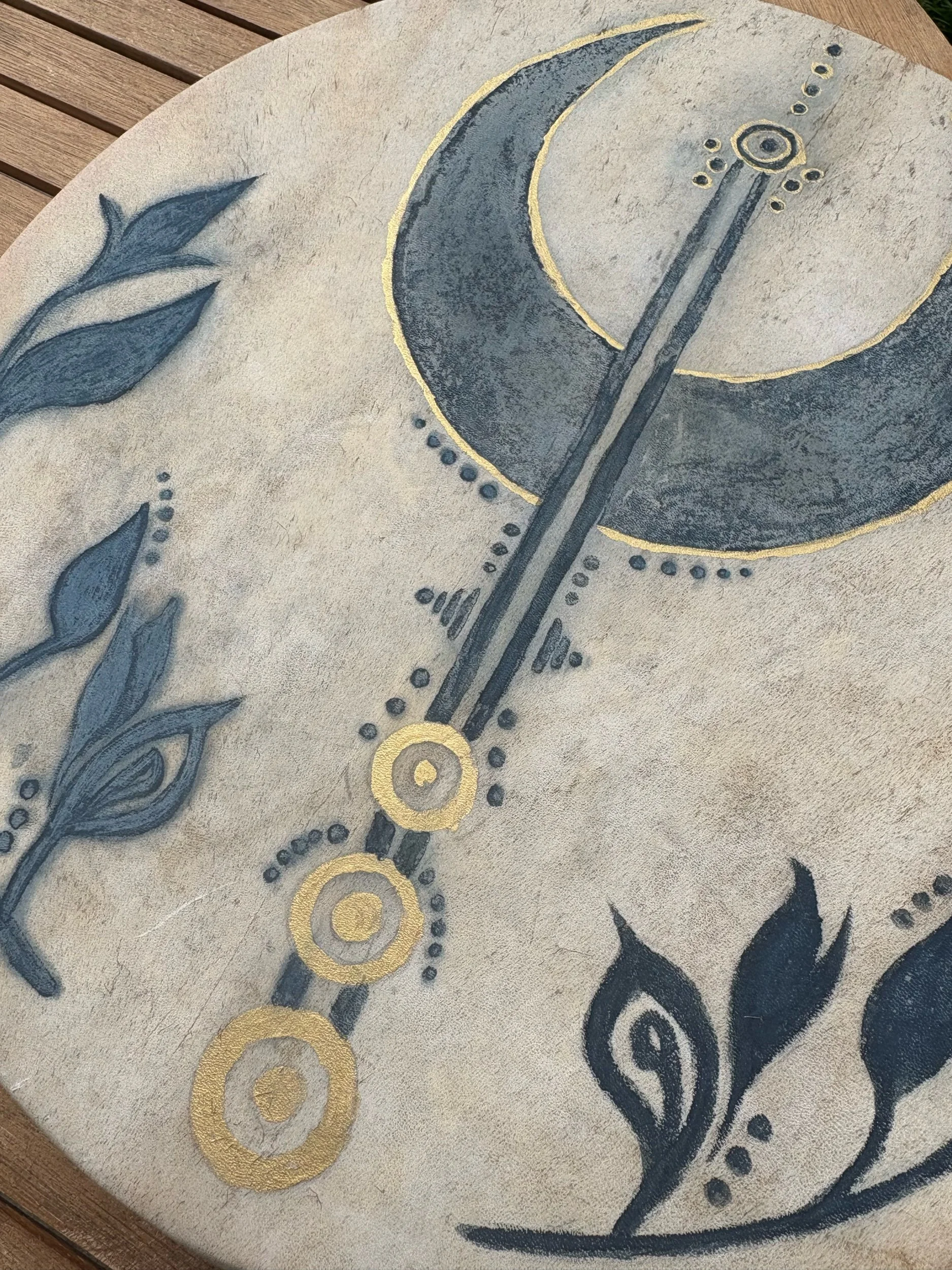 Image 3 of 4
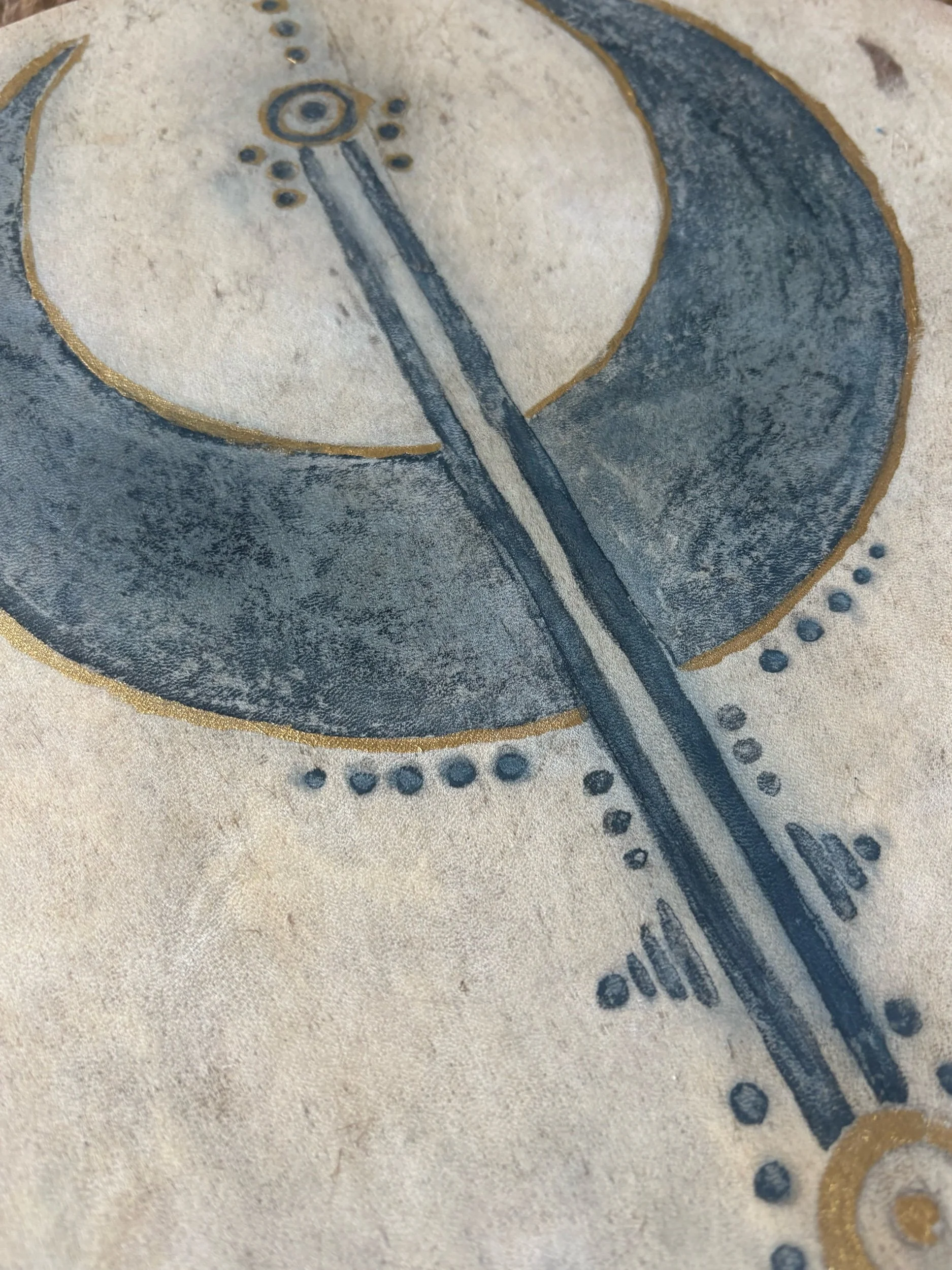 Image 4 of 4
Of blue women, ancient markings and the memory of the land.
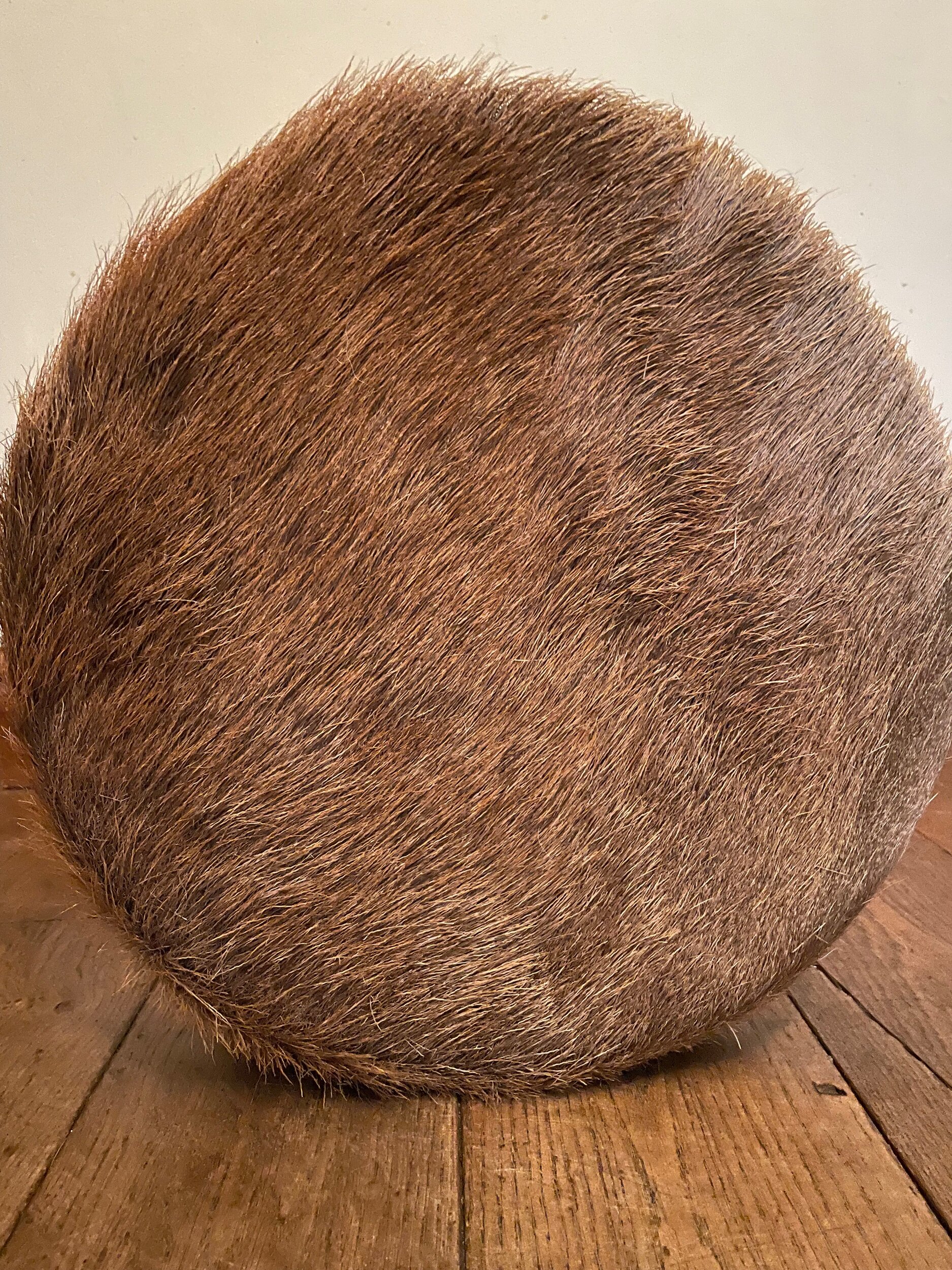
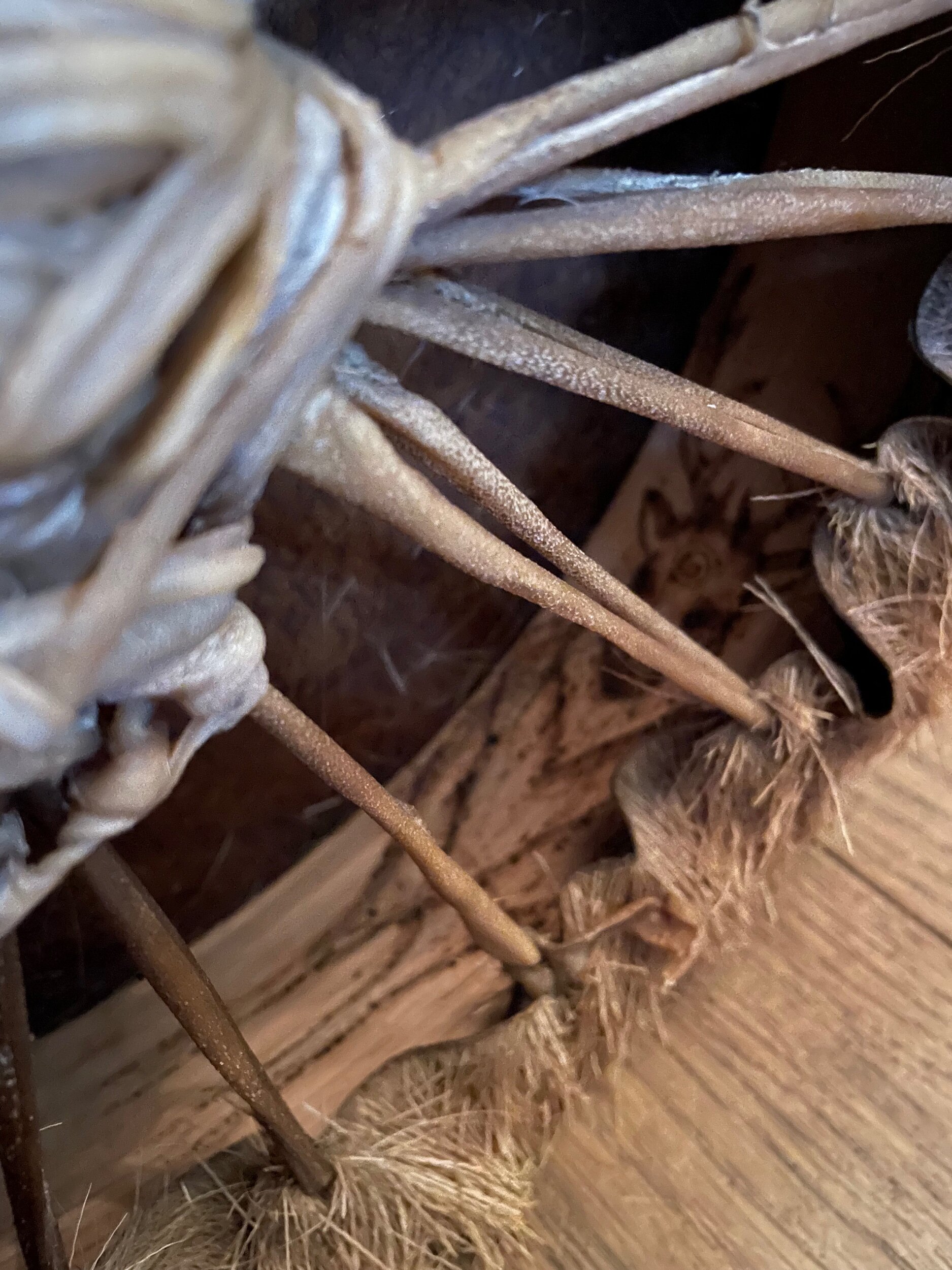
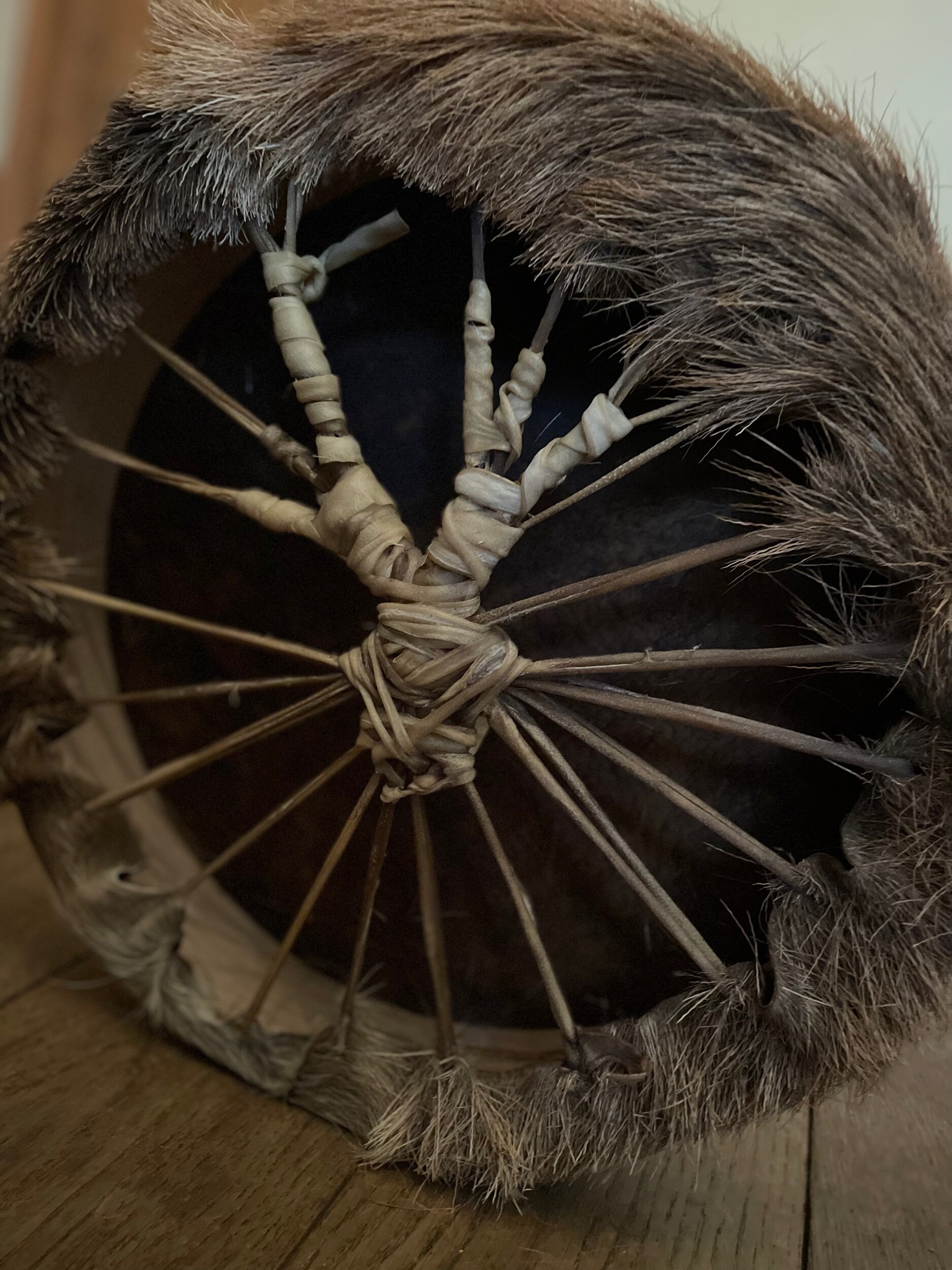
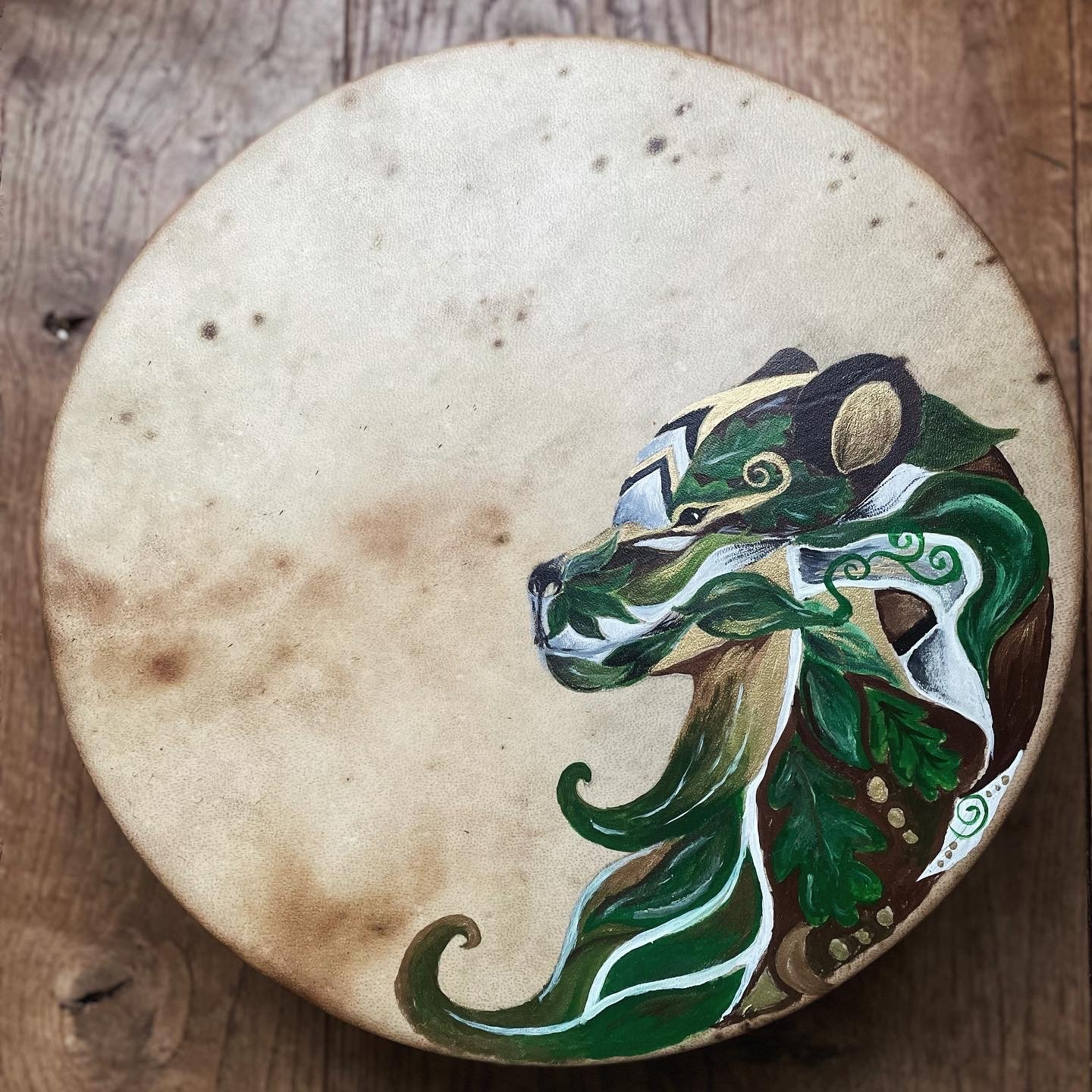
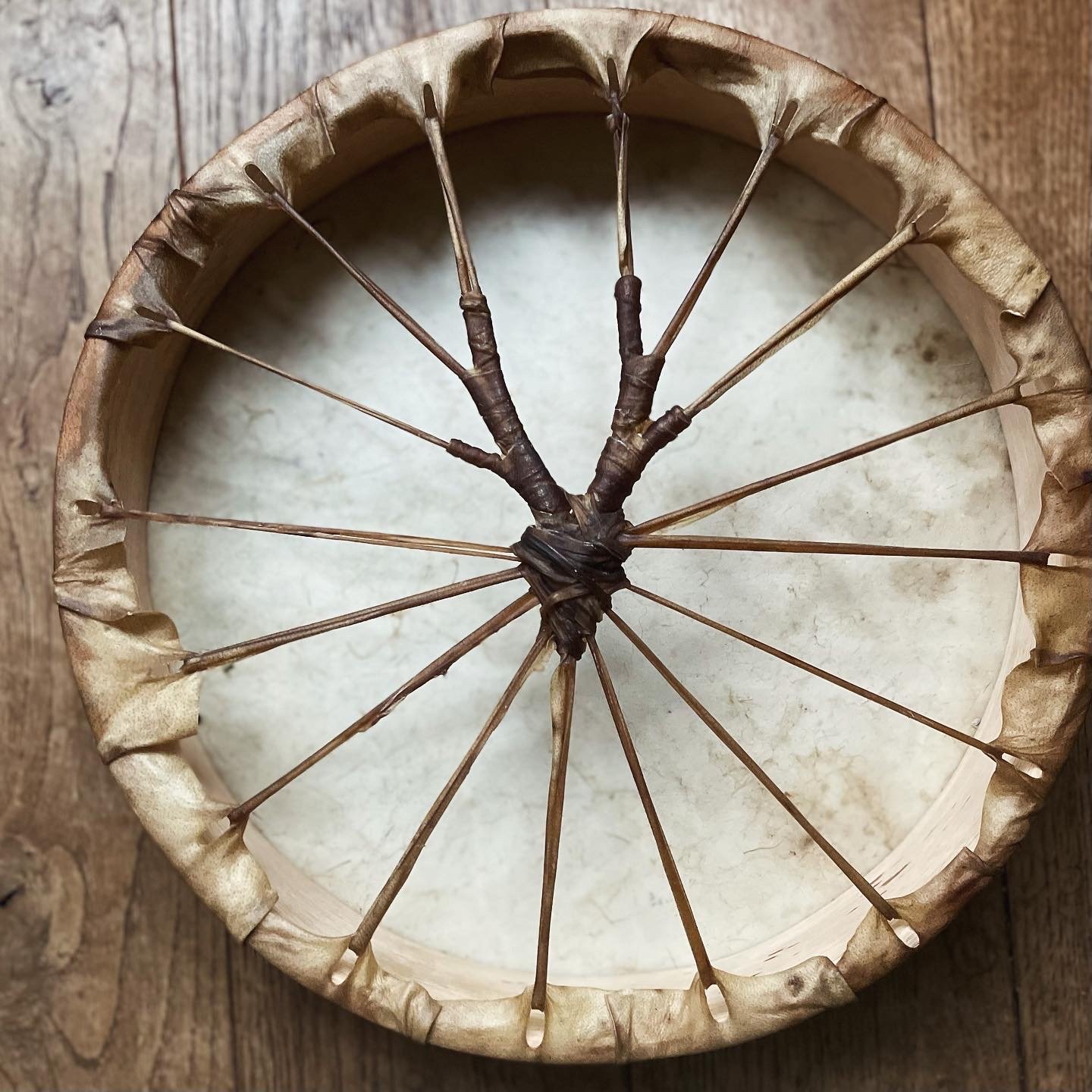
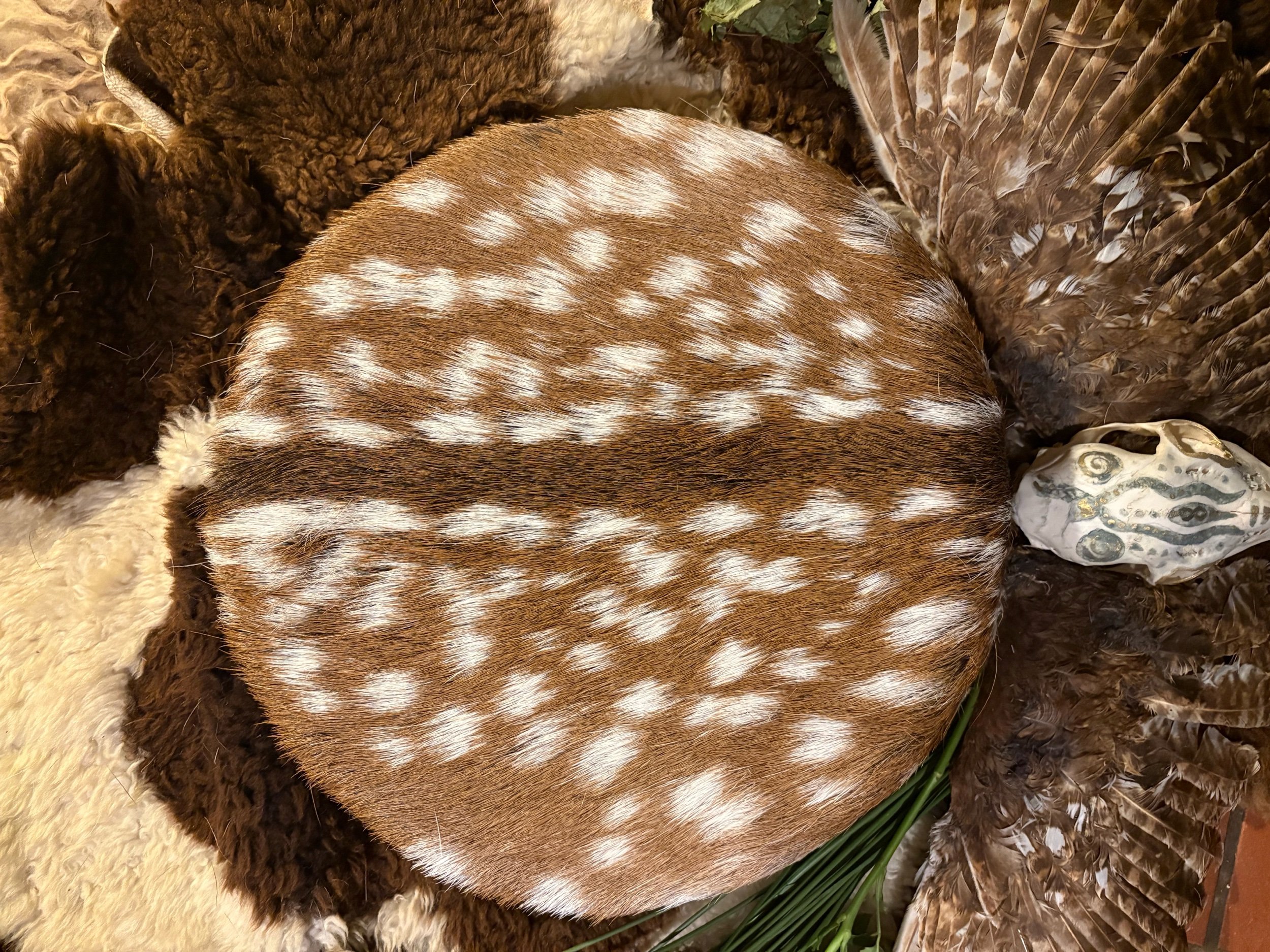
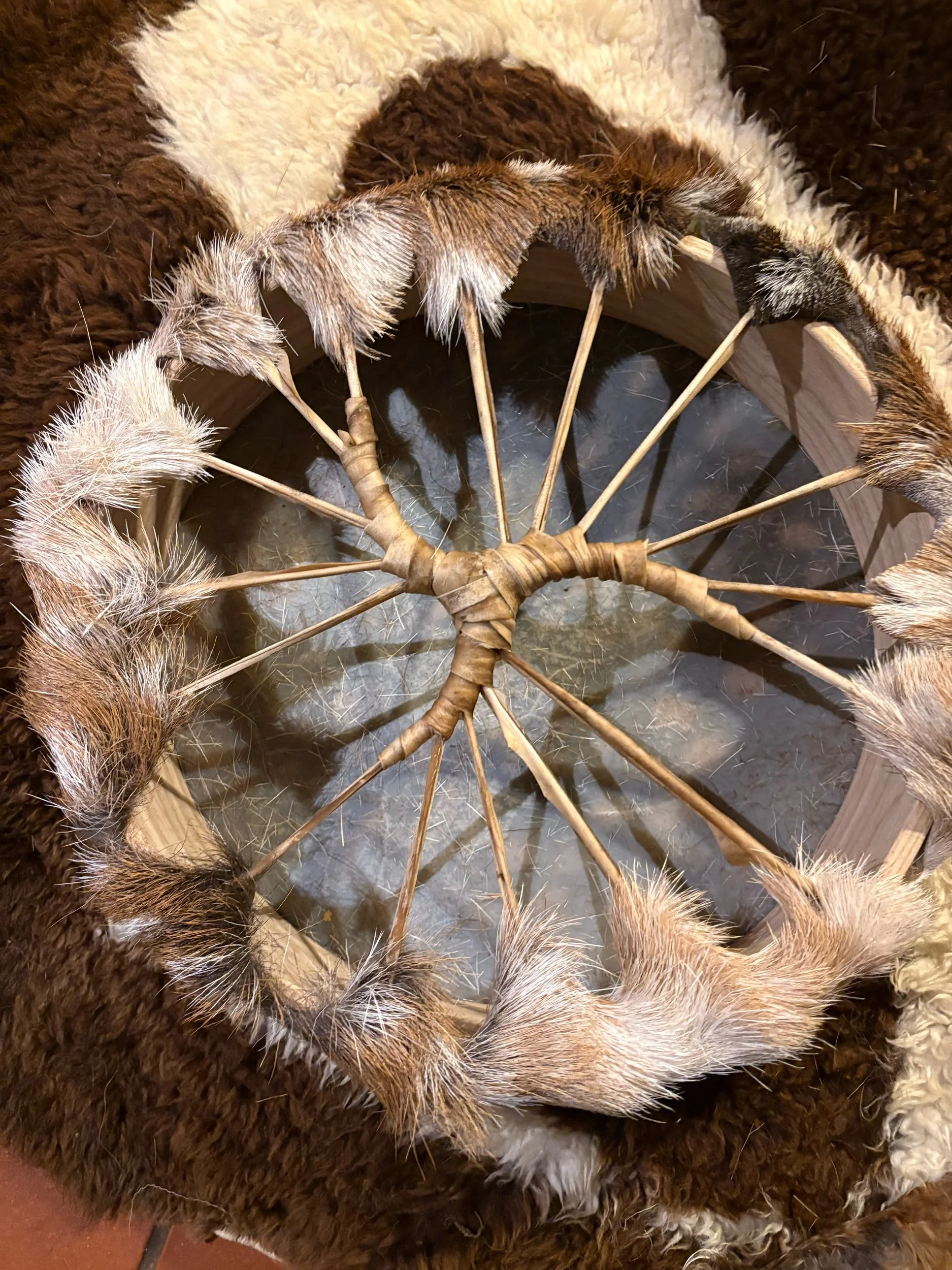
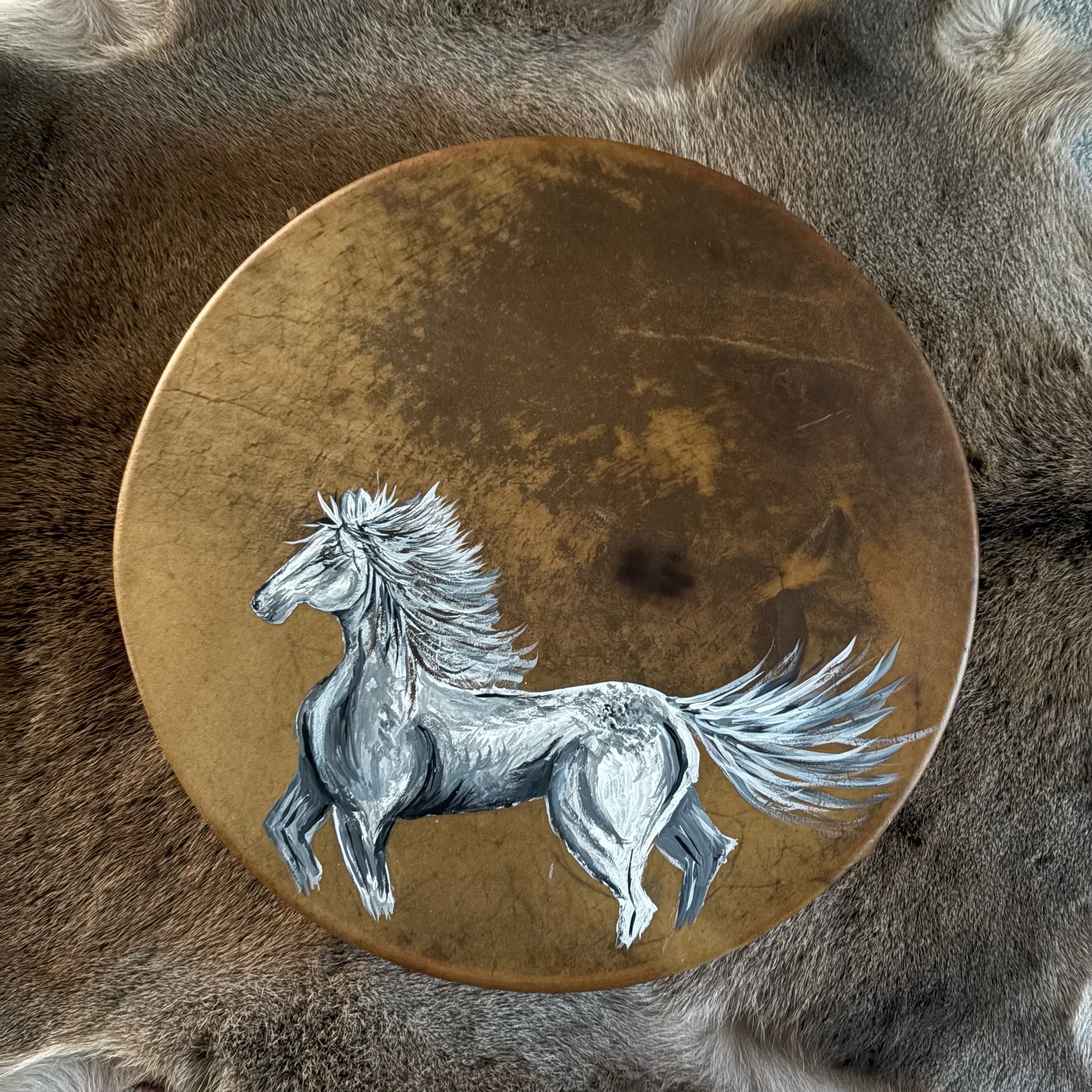
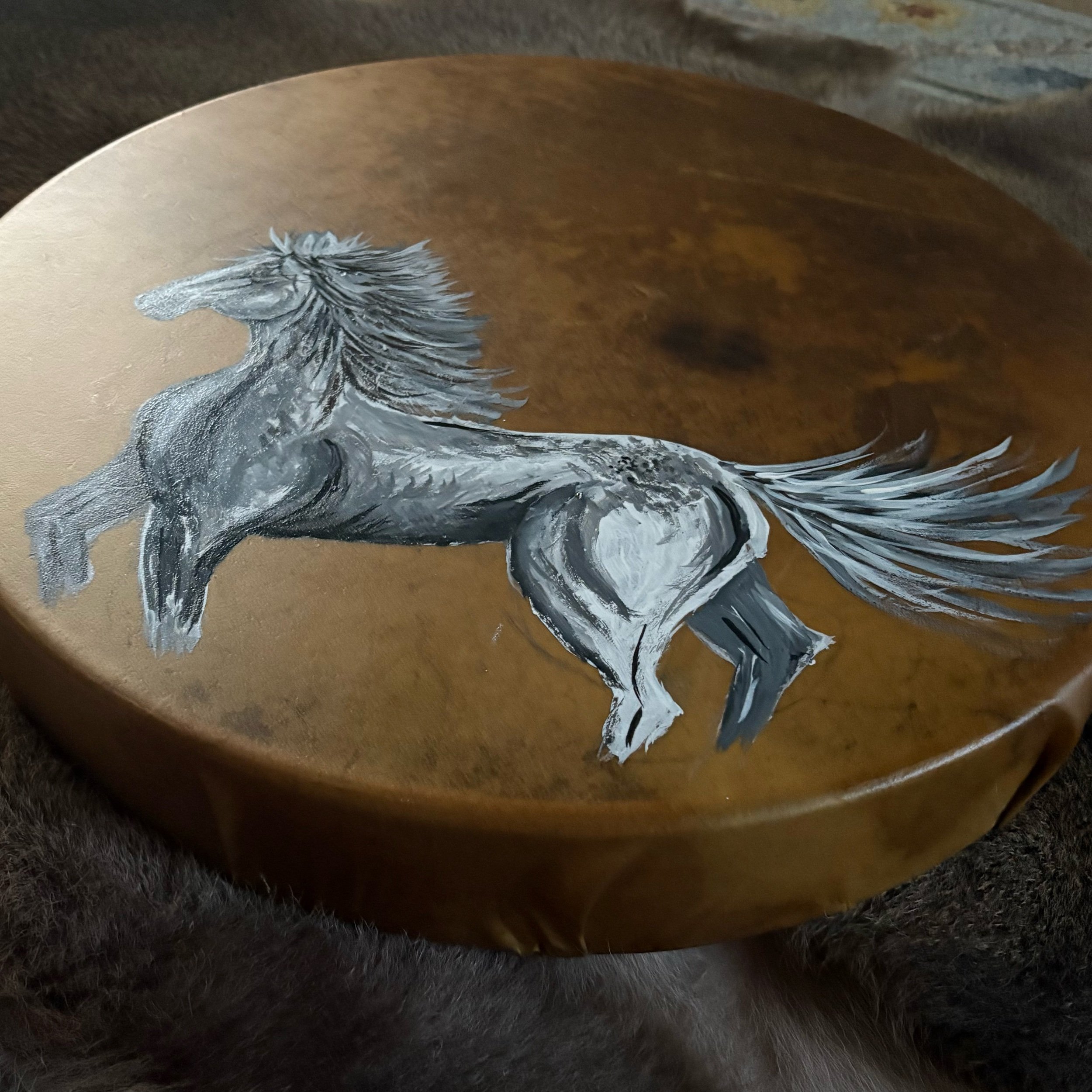
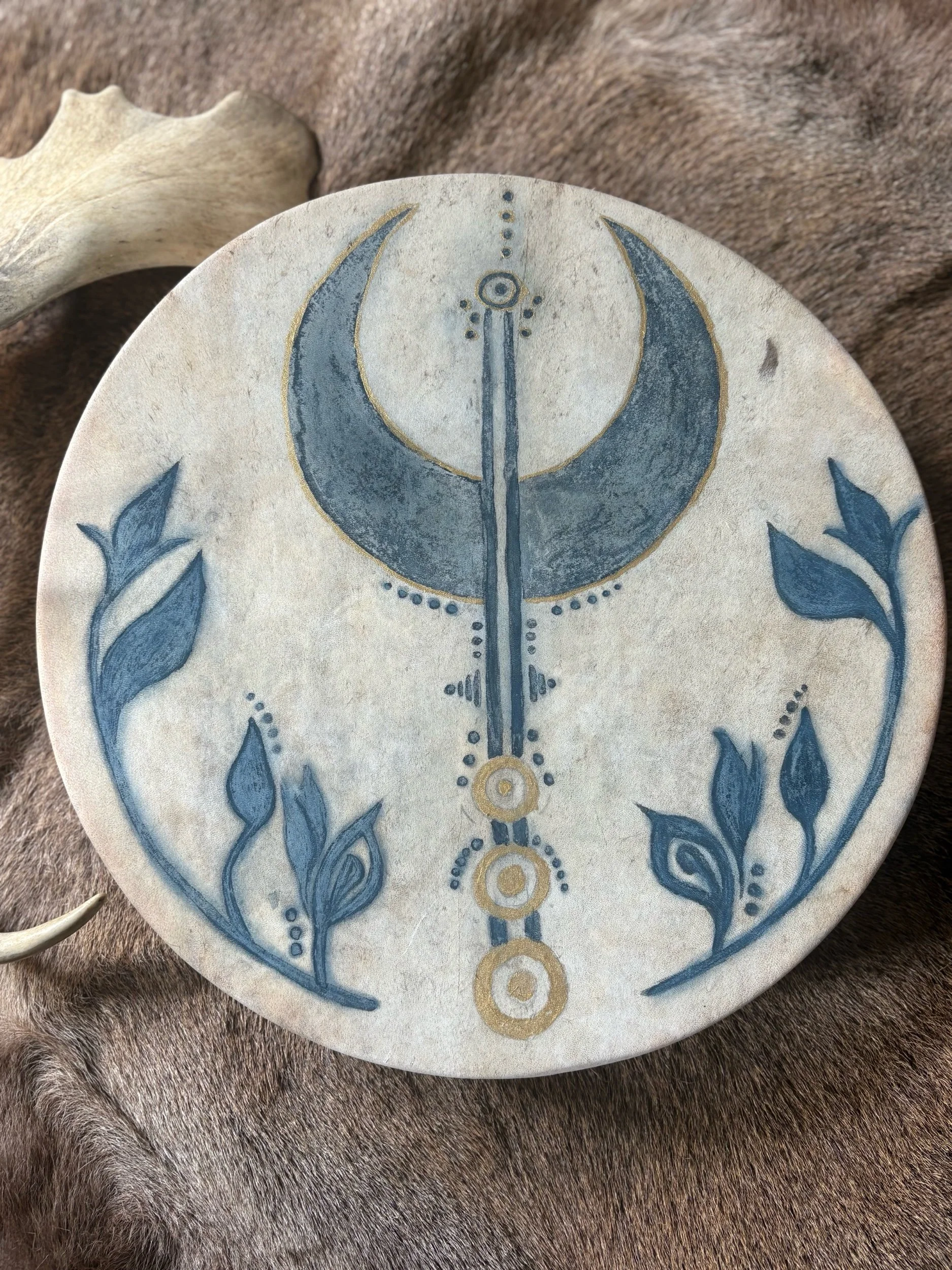
16inch Fallow Deer hide drum from the Welsh boarderlands on an ash hoop.
Many years ago, I had a dream of a woman whose body was painted with blue markings. I cannot tell you why that dream stayed with me, only that it did. There was something about her, about the blue upon her skin, that felt strangely familiar, as though I had encountered something I recognised without knowing quite what it was I was remembering.
At the time, I knew very little about the Picts, their history or the stories of the blue-painted people of these lands. It was only much later, as my fascination with the ancient peoples of Britain deepened, that I began to find threads connecting that dream to the stories I was discovering.
Over the years I have felt myself drawn repeatedly northwards, into the Highlands of Scotland, walking old Pictish trails, standing amongst carved stones and wondering about the people who once inhabited those landscapes. People whose lives were shaped by the same elemental relationships that continue to shape ours. The turning seasons, the movement of animals, the presence of ancestors, the plants that offered food, fibre, colour and medicine.
And somewhere amongst all of this was woad. An unassuming green plant with small yellow flowers, whose appearance gives little indication of the extraordinary blue concealed within its leaves.
Woad, Isatis tinctoria, has a long and fascinating history. For centuries it was cultivated across Europe as a source of blue dye, its leaves gathered and worked through a lengthy process that eventually transformed their hidden colour into a pigment of remarkable depth. Before imported indigo became widely available, woad was one of the great blue dyes of Europe, colouring wool, linen and the cloth worn by generations of people.
There is something almost improbable about the transformation. The leaves themselves are green, and the blue does not simply pour from them when they are crushed. It must be coaxed into being through water, time, changes in chemistry and exposure to air. The colour emerges through oxidation, as though the plant holds something that can only be revealed through its meeting with other elements.
I find myself endlessly fascinated by this.
Perhaps because so much of the work I do with hide is much the same. What appears to be one thing becomes another through a long relationship with water, movement, patience and the hands that tend it.
But woad carries another story, one that reaches into the mythology of these islands.
The Picts, whose name is commonly understood to derive from the Latin Picti, meaning the painted or marked people, have long been associated with bodies adorned in blue. Roman writers described peoples of Britain marking or colouring their bodies, and over time these accounts became entwined with the idea of warriors painted with woad before entering battle.
Whether the Picts themselves used woad in this way remains uncertain. There is no conclusive evidence that the blue markings described in ancient accounts were made with this particular plant, and the relationship between the historical Picts and those earlier Roman descriptions is far from straightforward.
Yet the image has endured.
Bodies marked in blue, skin carrying symbols of belonging, protection, identity or perhaps something we can no longer understand. The Pictish stones that remain across Scotland are covered with extraordinary carvings of animals, crescents, serpents, mirrors and other enigmatic forms whose meanings have not survived intact.
I have stood before some of these stones and wondered what it might have meant to live in a world where such markings were part of a language shared between people, place and the more-than-human world.
We cannot know exactly what those symbols meant to the people who carved them. And I think there is something important in allowing that mystery to remain, rather than filling every space with our own interpretations.
Perhaps that is why the woman from my dream has stayed with me for so long.
I do not know who she was, or whether she belonged to any particular time or place. I am not certain that dreams need to be explained in that way. But she opened a curiosity that has continued to lead me into landscapes, histories and materials I might otherwise never have encountered.
And now, many years later, I find myself sitting with deer hide and woad, bringing these two materials together through the work of my hands.
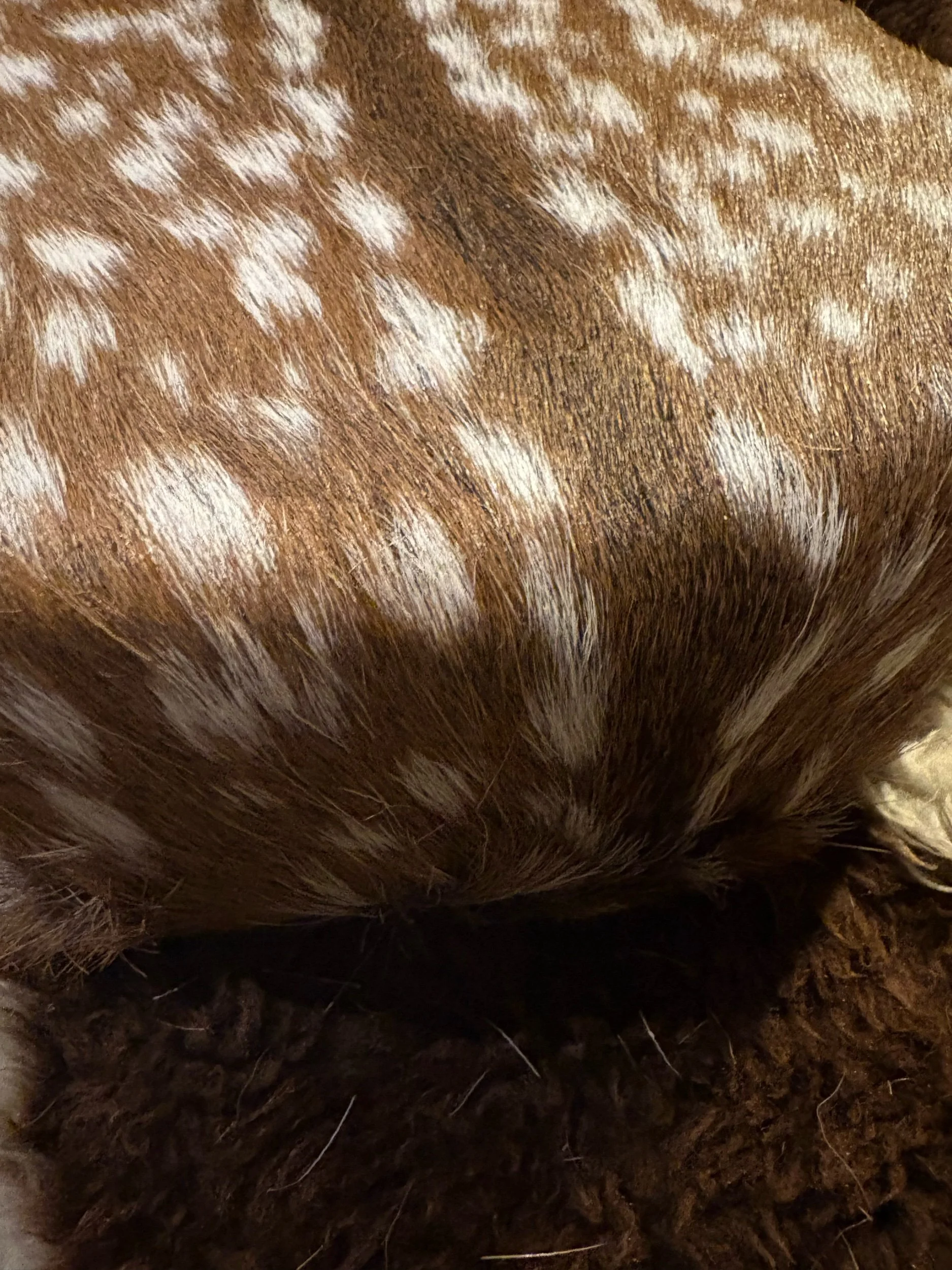
This drum began with a wild fallow deer, whose hide I transformed into rawhide through the slow processes of fleshing, cleaning, stretching and drying. There is already an extraordinary amount of work held within a drum before a single mark is made upon its surface, and I never forget that the material I am working with was once the living skin of another animal.
To work with hide is to enter into a relationship with what remains of a life. It asks something of me beyond simply making an object, and I feel a responsibility to honour the animal through the care and attention I bring to its transformation.
I had been wanting to paint with woad for some time, although working with a natural blue pigment upon rawhide presented its own challenges.
I began by breaking down the tiny particles of woad pigment into a fine powder, before mixing them into a wash using egg and oil, together with a little hide glue I had made by gently heating pieces of deer hide. I wanted to work with natural binders, allowing the blue to settle into the surface of the hide without covering it in a heavy layer of paint that might interfere with the voice of the drum.
What followed was a lengthy conversation between pigment and skin.
Thin washes were applied and left to cure, before I gently wiped away what had not held. I watched the blue settle into the texture of the rawhide, sometimes remaining and sometimes disappearing almost entirely beneath my cloth. I returned again and again, slowly building colour, learning how the pigment responded to the hide and how much it would allow me to leave behind.
There were moments when I wondered whether the whole thing would work at all.
But I have learned over the years that natural materials rarely respond well to being hurried. There is a particular kind of patience required when working with something that has its own nature, its own limitations and its own way of receiving what we offer.
Eventually, the most beautiful blue began to emerge.
Not a flat, uniform colour, but something softer and more weathered, as though the pigment had become part of the hide itself. The pale skin remains visible beneath the washes, creating depth and variation that shifts with the light. It reminds me of ancient markings upon stone, of pigments worn by weather and time, of something that has been present for far longer than the hands that made it.
I finished the drum with touches of genuine 18ct gold paint.
There is something extraordinary about the meeting of these two colours. The deep, earthy blue of a plant that has grown upon these lands for centuries, and the warm luminosity of gold, a metal born through processes far older than the Earth itself.
Gold has been treasured across cultures for thousands of years, associated with the sun, the sacred, the enduring and the divine. Yet I am equally fascinated by its material nature, by the fact that this precious substance has travelled through geological time before finding its way into the smallest marks upon a deer-hide drum.
And so here they meet.
The living green leaves of woad, the skin of a wild deer, the egg and oil that helped carry the pigment, the hide transformed into glue, and the gold that catches the light.
Each material arrives with its own history, its own origin, its own relationship to the world. None exists simply for my use, and I find myself increasingly interested in what happens when making becomes an act of bringing these different lives and substances into relationship.
There is a tendency to speak of ancient crafts as though we are somehow travelling backwards, attempting to recreate a world that has disappeared. But I do not experience my work in that way.
I am not trying to become one of the people who lived upon these lands thousands of years ago, nor do I claim to know what their practices meant to them. I am a woman living now, with my own hands, my own questions and my own relationship with the materials that surround me.
Yet there is a continuity in the act of making that I find deeply moving.
Human hands have worked with animal skin, plant colour, bone, wood and earth for thousands of years. We have made vessels, clothing, tools, instruments and objects of beauty from the lives and materials available to us. Our ancestors learned through observation, experimentation, failure and the passing of knowledge from one generation to another.
When I sit with a hide and grind pigment, when I stir a binder or wait for a wash of colour to dry, I am participating in that long human relationship with the material world.
And perhaps that is what the woman in my dream first stirred in me all those years ago.
Not a need to know who she was, or to claim some ancient story as my own, but a curiosity about the marks we make, the materials we choose and the ways our bodies have always been in conversation with the living world.
I wonder what she would make of this drum, this pale deer skin carrying the blue of woad and the light of gold.
Perhaps she would recognise something in it.
Or perhaps that is simply my own imagination, reaching across the distance between a dream and the work of my hands.
Either way, I am grateful for the thread she left me to follow.
Woad & Hide is a drum born from that curiosity. From years of wandering Pictish landscapes, from a fascination with an extraordinary green plant, and from the slow, intimate work of transforming animal skin into something that can be sounded.
A meeting of old materials and new hands, carrying a story that began long before I understood where it might lead.
And now, this drum waits for the next part of its story, and the hands that will bring its voice into being.
exchange is £425 plus p&p, or kerbside collection from Ludlow
Of blue women, ancient markings and the memory of the land.
16inch Fallow Deer hide drum from the Welsh boarderlands on an ash hoop.
Many years ago, I had a dream of a woman whose body was painted with blue markings. I cannot tell you why that dream stayed with me, only that it did. There was something about her, about the blue upon her skin, that felt strangely familiar, as though I had encountered something I recognised without knowing quite what it was I was remembering.
At the time, I knew very little about the Picts, their history or the stories of the blue-painted people of these lands. It was only much later, as my fascination with the ancient peoples of Britain deepened, that I began to find threads connecting that dream to the stories I was discovering.
Over the years I have felt myself drawn repeatedly northwards, into the Highlands of Scotland, walking old Pictish trails, standing amongst carved stones and wondering about the people who once inhabited those landscapes. People whose lives were shaped by the same elemental relationships that continue to shape ours. The turning seasons, the movement of animals, the presence of ancestors, the plants that offered food, fibre, colour and medicine.
And somewhere amongst all of this was woad. An unassuming green plant with small yellow flowers, whose appearance gives little indication of the extraordinary blue concealed within its leaves.
Woad, Isatis tinctoria, has a long and fascinating history. For centuries it was cultivated across Europe as a source of blue dye, its leaves gathered and worked through a lengthy process that eventually transformed their hidden colour into a pigment of remarkable depth. Before imported indigo became widely available, woad was one of the great blue dyes of Europe, colouring wool, linen and the cloth worn by generations of people.
There is something almost improbable about the transformation. The leaves themselves are green, and the blue does not simply pour from them when they are crushed. It must be coaxed into being through water, time, changes in chemistry and exposure to air. The colour emerges through oxidation, as though the plant holds something that can only be revealed through its meeting with other elements.
I find myself endlessly fascinated by this.
Perhaps because so much of the work I do with hide is much the same. What appears to be one thing becomes another through a long relationship with water, movement, patience and the hands that tend it.
But woad carries another story, one that reaches into the mythology of these islands.
The Picts, whose name is commonly understood to derive from the Latin Picti, meaning the painted or marked people, have long been associated with bodies adorned in blue. Roman writers described peoples of Britain marking or colouring their bodies, and over time these accounts became entwined with the idea of warriors painted with woad before entering battle.
Whether the Picts themselves used woad in this way remains uncertain. There is no conclusive evidence that the blue markings described in ancient accounts were made with this particular plant, and the relationship between the historical Picts and those earlier Roman descriptions is far from straightforward.
Yet the image has endured.
Bodies marked in blue, skin carrying symbols of belonging, protection, identity or perhaps something we can no longer understand. The Pictish stones that remain across Scotland are covered with extraordinary carvings of animals, crescents, serpents, mirrors and other enigmatic forms whose meanings have not survived intact.
I have stood before some of these stones and wondered what it might have meant to live in a world where such markings were part of a language shared between people, place and the more-than-human world.
We cannot know exactly what those symbols meant to the people who carved them. And I think there is something important in allowing that mystery to remain, rather than filling every space with our own interpretations.
Perhaps that is why the woman from my dream has stayed with me for so long.
I do not know who she was, or whether she belonged to any particular time or place. I am not certain that dreams need to be explained in that way. But she opened a curiosity that has continued to lead me into landscapes, histories and materials I might otherwise never have encountered.
And now, many years later, I find myself sitting with deer hide and woad, bringing these two materials together through the work of my hands.
This drum began with a wild fallow deer, whose hide I transformed into rawhide through the slow processes of fleshing, cleaning, stretching and drying. There is already an extraordinary amount of work held within a drum before a single mark is made upon its surface, and I never forget that the material I am working with was once the living skin of another animal.
To work with hide is to enter into a relationship with what remains of a life. It asks something of me beyond simply making an object, and I feel a responsibility to honour the animal through the care and attention I bring to its transformation.
I had been wanting to paint with woad for some time, although working with a natural blue pigment upon rawhide presented its own challenges.
I began by breaking down the tiny particles of woad pigment into a fine powder, before mixing them into a wash using egg and oil, together with a little hide glue I had made by gently heating pieces of deer hide. I wanted to work with natural binders, allowing the blue to settle into the surface of the hide without covering it in a heavy layer of paint that might interfere with the voice of the drum.
What followed was a lengthy conversation between pigment and skin.
Thin washes were applied and left to cure, before I gently wiped away what had not held. I watched the blue settle into the texture of the rawhide, sometimes remaining and sometimes disappearing almost entirely beneath my cloth. I returned again and again, slowly building colour, learning how the pigment responded to the hide and how much it would allow me to leave behind.
There were moments when I wondered whether the whole thing would work at all.
But I have learned over the years that natural materials rarely respond well to being hurried. There is a particular kind of patience required when working with something that has its own nature, its own limitations and its own way of receiving what we offer.
Eventually, the most beautiful blue began to emerge.
Not a flat, uniform colour, but something softer and more weathered, as though the pigment had become part of the hide itself. The pale skin remains visible beneath the washes, creating depth and variation that shifts with the light. It reminds me of ancient markings upon stone, of pigments worn by weather and time, of something that has been present for far longer than the hands that made it.
I finished the drum with touches of genuine 18ct gold paint.
There is something extraordinary about the meeting of these two colours. The deep, earthy blue of a plant that has grown upon these lands for centuries, and the warm luminosity of gold, a metal born through processes far older than the Earth itself.
Gold has been treasured across cultures for thousands of years, associated with the sun, the sacred, the enduring and the divine. Yet I am equally fascinated by its material nature, by the fact that this precious substance has travelled through geological time before finding its way into the smallest marks upon a deer-hide drum.
And so here they meet.
The living green leaves of woad, the skin of a wild deer, the egg and oil that helped carry the pigment, the hide transformed into glue, and the gold that catches the light.
Each material arrives with its own history, its own origin, its own relationship to the world. None exists simply for my use, and I find myself increasingly interested in what happens when making becomes an act of bringing these different lives and substances into relationship.
There is a tendency to speak of ancient crafts as though we are somehow travelling backwards, attempting to recreate a world that has disappeared. But I do not experience my work in that way.
I am not trying to become one of the people who lived upon these lands thousands of years ago, nor do I claim to know what their practices meant to them. I am a woman living now, with my own hands, my own questions and my own relationship with the materials that surround me.
Yet there is a continuity in the act of making that I find deeply moving.
Human hands have worked with animal skin, plant colour, bone, wood and earth for thousands of years. We have made vessels, clothing, tools, instruments and objects of beauty from the lives and materials available to us. Our ancestors learned through observation, experimentation, failure and the passing of knowledge from one generation to another.
When I sit with a hide and grind pigment, when I stir a binder or wait for a wash of colour to dry, I am participating in that long human relationship with the material world.
And perhaps that is what the woman in my dream first stirred in me all those years ago.
Not a need to know who she was, or to claim some ancient story as my own, but a curiosity about the marks we make, the materials we choose and the ways our bodies have always been in conversation with the living world.
I wonder what she would make of this drum, this pale deer skin carrying the blue of woad and the light of gold.
Perhaps she would recognise something in it.
Or perhaps that is simply my own imagination, reaching across the distance between a dream and the work of my hands.
Either way, I am grateful for the thread she left me to follow.
Woad & Hide is a drum born from that curiosity. From years of wandering Pictish landscapes, from a fascination with an extraordinary green plant, and from the slow, intimate work of transforming animal skin into something that can be sounded.
A meeting of old materials and new hands, carrying a story that began long before I understood where it might lead.
And now, this drum waits for the next part of its story, and the hands that will bring its voice into being.
exchange is £425 plus p&p, or kerbside collection from Ludlow